
Disclosure: Some links in this article are affiliate links. If you sign up through one, BizBot may earn a commission at no extra cost to you. It does not change which tools we list, or what we say about them — including the parts that are critical. How we evaluate software.
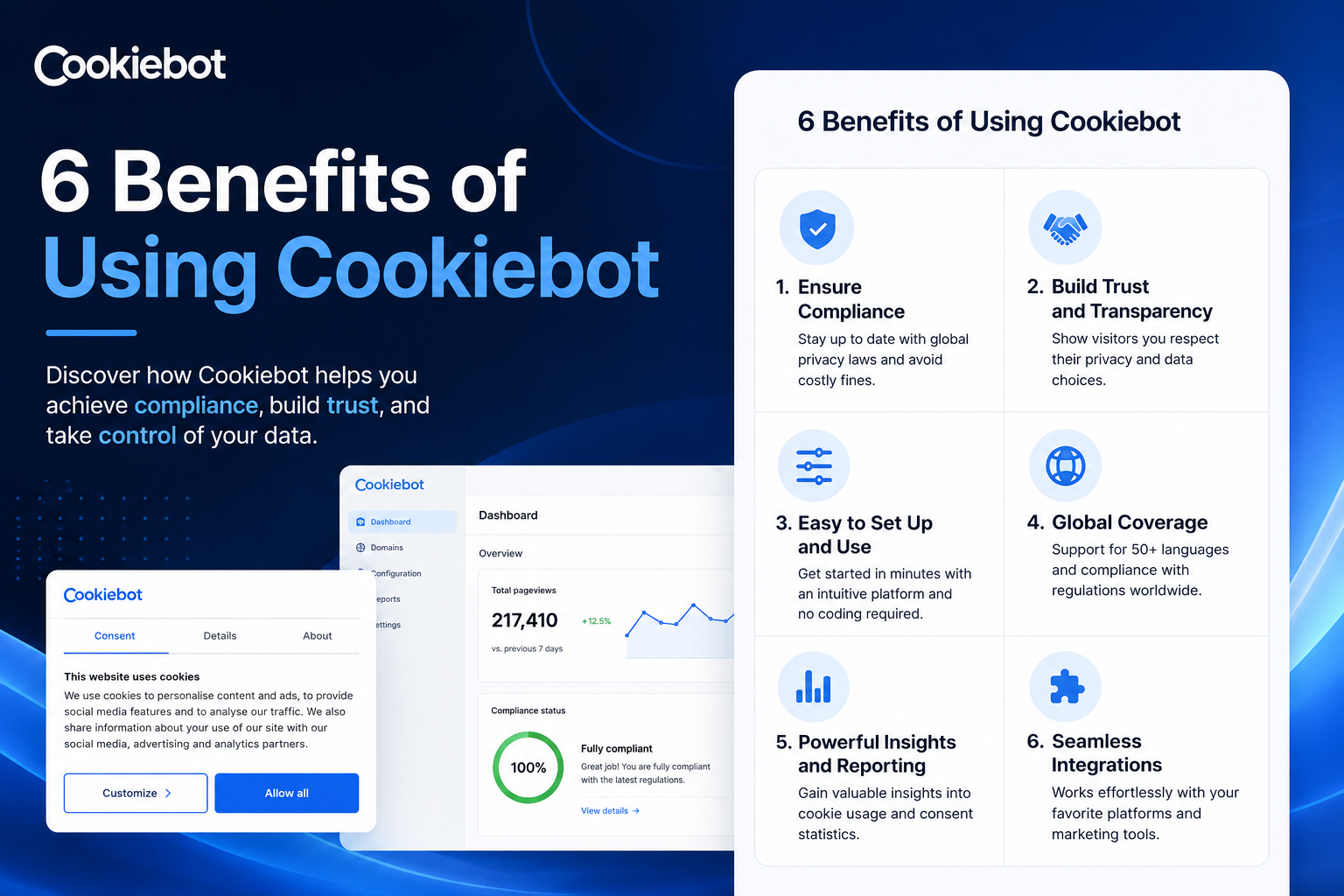
Cookiebot helps ecommerce websites stay compliant with privacy laws while protecting analytics, improving customer trust, and supporting compliant analytics and advertising workflows. Ecommerce businesses use Cookiebot to manage cookie consent, support Google Consent Mode, and maintain accurate tracking across analytics and advertising platforms.
Privacy compliance has become a major challenge for online stores. Regulations such as GDPR, CCPA, and other privacy laws now require websites to obtain user consent before activating many tracking technologies.
At the same time, ecommerce brands still rely heavily on analytics, personalization, CRM software, marketing automation, and retargeting campaigns to drive revenue. That creates a difficult balance between respecting user privacy and maintaining business visibility.
This is where Cookiebot has become valuable for ecommerce websites.
The platform supports more than 2.4 million websites and apps globally while processing billions of monthly user consents. The platform also supports more than 47 languages for international compliance management.
Why Ecommerce Websites Need Cookie Consent Management
Modern ecommerce websites depend heavily on customer data to operate effectively. Every interaction on an online store generates information that helps businesses improve customer experiences, optimize advertising campaigns, and increase conversions.
Ecommerce brands commonly track browsing behavior, shopping cart activity, purchase history, email signups, customer locations, device behavior, and advertising attribution data.
This information powers many essential ecommerce systems, including analytics platforms, CRM software, personalized product recommendations, customer support tools, and marketing automation workflows.
Privacy Regulations Are Changing Ecommerce Operations
Privacy laws have changed how ecommerce businesses collect and use customer data.
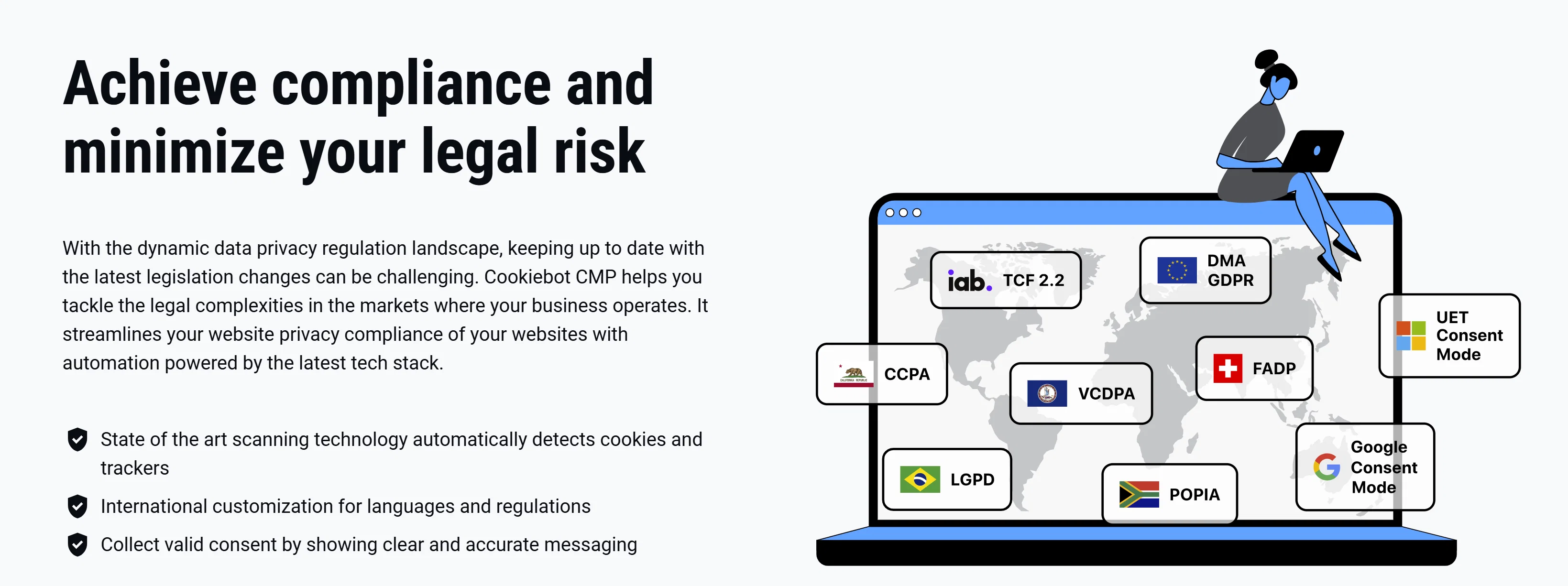
Regulations such as GDPR in Europe, CCPA/CPRA in California, and LGPD in Brazil now require websites to obtain user consent before activating many non-essential cookies and tracking technologies.
Privacy regulations continue expanding globally as governments place greater focus on consumer data protection. DLA Piper’s Data Protection Laws of the World provides an overview of privacy and data protection laws across more than 160 jurisdictions, showing how complex global compliance has become for ecommerce businesses.
This creates a major challenge for ecommerce businesses because online stores still rely heavily on customer data to measure conversions, optimize campaigns, personalize shopping experiences, and improve customer journeys.
At the same time, businesses must now provide transparent consent experiences that clearly explain how customer information is collected and used.
Poor Consent Management Can Hurt Analytics and Advertising
One of the biggest risks of poor cookie consent management is inaccurate analytics data.
If consent systems are configured incorrectly, platforms like Google Analytics may lose important conversion signals. This can make it harder for ecommerce teams to understand customer behavior and improve marketing performance.
Advertising campaigns can also become less effective.
Many ecommerce businesses rely heavily on retargeting campaigns through platforms like Google Ads and Meta Ads to recover abandoned carts and improve return on ad spend. As customer journeys become more fragmented across devices, businesses are placing greater focus on cross-device tracking attribution to improve ecommerce analytics visibility and campaign optimization.
Without compliant consent handling, ecommerce brands may lose valuable attribution and audience data needed for campaign optimization.
Customer Trust Has Become More Important
Consumers are becoming more aware of online privacy and data collection practices.
Many shoppers now expect ecommerce websites to explain clearly how personal information will be used. Poor consent experiences or overly aggressive tracking practices can reduce customer confidence and damage brand credibility.
Consumer trust now plays a direct role in ecommerce performance. PwC’s Voice of the Consumer Survey found that 83% of consumers consider data protection a top factor influencing trust in a company, highlighting how transparency and responsible data practices can directly affect customer loyalty and purchasing behavior.
This becomes especially important for ecommerce businesses using personalization systems, CRM software, customer segmentation, and loop marketing strategies where customer interactions improve future campaigns and recommendations. Modern ecommerce growth now depends heavily on e-commerce personalization strategies that create more tailored shopping experiences while improving long-term customer retention.
Transparent privacy practices can help ecommerce brands build stronger long-term customer relationships.
International Ecommerce Growth Increases Compliance Complexity
International ecommerce businesses often face different privacy requirements across multiple regions.
A growing online store may receive visitors from Europe, North America, Asia, and South America simultaneously. Each region may enforce different consent expectations and compliance standards.
Managing these workflows manually becomes increasingly difficult as ecommerce operations scale globally.
This is why many ecommerce businesses now use platforms like Cookiebot.
Cookiebot helps ecommerce brands automate consent management, support Google Consent Mode, maintain compliance across regions, and preserve more accurate analytics and marketing performance.
Instead of treating compliance as a legal obstacle, many ecommerce businesses now view cookie consent management as part of building customer trust and supporting sustainable first-party data strategies.
1. Cookiebot Helps Ecommerce Websites Stay GDPR and CCPA Compliant
The biggest advantage of Cookiebot is automated privacy compliance for ecommerce businesses.
Cookiebot automatically scans websites for cookies and tracking technologies, then categorizes them based on their purpose. This removes a large amount of manual compliance work for ecommerce teams.
For example, a Shopify store may run Google Analytics, Meta Pixel, live chat widgets, email popups, customer support tools, and retargeting scripts at the same time. Each of these technologies can introduce cookies that require consent management.
The platform identifies these cookies automatically and displays consent banners based on the visitor’s location and applicable regulations.
This becomes especially important for ecommerce businesses selling internationally. A single online store may receive visitors from Europe, California, Brazil, and other regions with different privacy requirements.
Cookiebot helps simplify this process by adapting consent experiences automatically for different regions.
2. Cookiebot Supports Google Consent Mode for Better Analytics
One of the most valuable Cookiebot features for ecommerce brands is Google Consent Mode support.
Many ecommerce businesses worry that privacy compliance will reduce tracking accuracy and hurt advertising performance. The platform helps solve this problem by integrating directly with Google Consent Mode.
Instead of blocking all measurement activity completely, Google Consent Mode adjusts analytics behavior based on user consent preferences. This allows ecommerce businesses to preserve more accurate conversion modeling and campaign reporting.
According to Google, Consent Mode helps advertisers maintain measurement insights while respecting user privacy choices.
This matters because ecommerce businesses depend heavily on accurate attribution data for platforms like Google Ads, Shopping campaigns, YouTube Ads, and Performance Max campaigns.
Without reliable tracking, ecommerce brands can struggle to optimize advertising spend effectively.
3. Cookiebot Improves Customer Trust and Transparency
Clear privacy practices can improve customer confidence in ecommerce brands.
Consumers are becoming more aware of how websites collect and use personal data. Many shoppers now expect transparency before sharing information online.
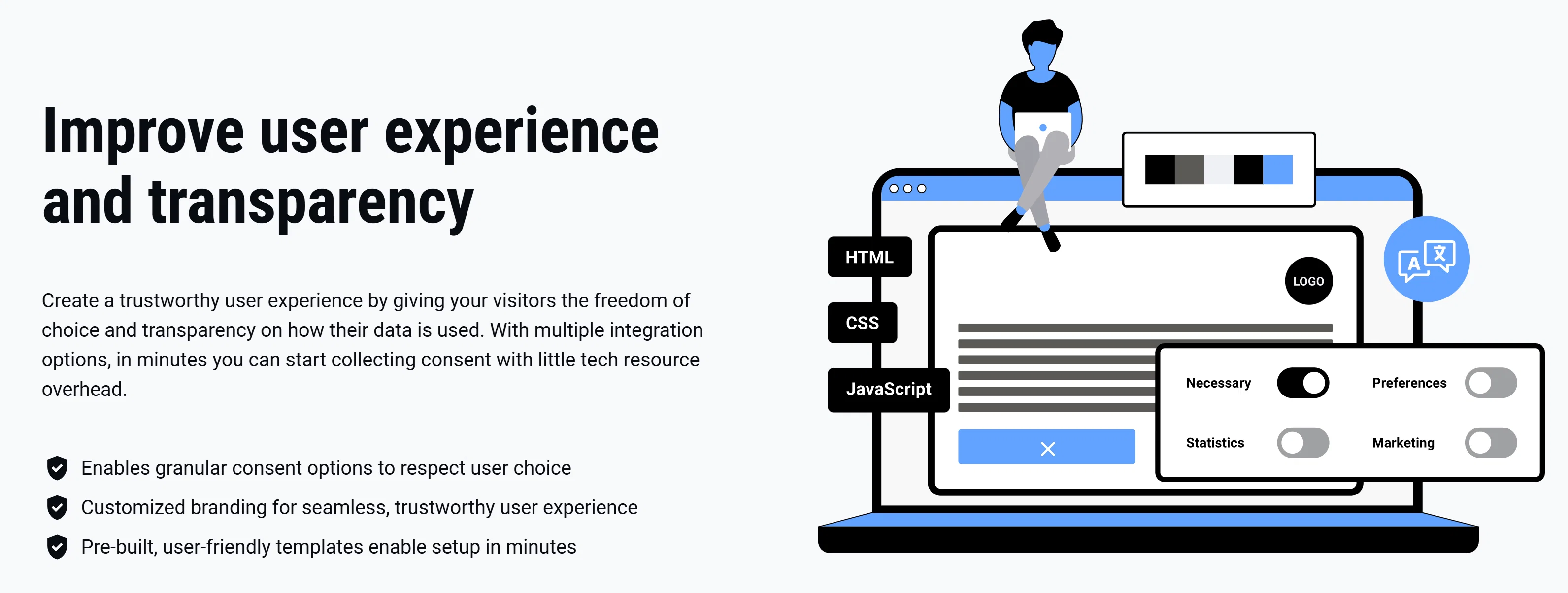
Cookiebot helps ecommerce websites create more transparent consent experiences through clear cookie categories, detailed declarations, and user-friendly consent banners.
This transparency supports stronger customer relationships over time.
For example, an ecommerce skincare brand using personalized recommendations and email automation may collect browsing behavior to improve customer experiences. When users clearly understand how their data will be used, they are often more comfortable sharing consent preferences.
This approach also supports loop marketing strategies where customer interactions continuously improve future personalization and engagement campaigns.
4. Cookiebot Automates Cookie Scanning and Policy Updates
Cookiebot reduces ongoing compliance maintenance for ecommerce teams.
Ecommerce websites change constantly. Businesses regularly install new apps, analytics tools, advertising scripts, chat systems, and marketing automation platforms.
Managing cookie compliance manually becomes difficult as ecommerce systems grow more complex.
The platform automatically scans websites on an ongoing basis and updates cookie declarations dynamically. This helps ecommerce businesses maintain accurate compliance documentation without manually reviewing every new technology added to the website.
For growing ecommerce stores, this automation saves significant time.
For example, a WooCommerce business preparing for a holiday campaign may temporarily add several new plugins for promotions, customer engagement, or analytics. Without automated scanning, teams could easily overlook newly added cookies or trackers.
Cookiebot helps reduce this risk by continuously monitoring website technologies.
5. Improved Control Over Website Tracking Technologies
Cookiebot helps ecommerce businesses maintain better control over the tracking technologies running across their websites.
As online stores continue adding analytics tools, advertising scripts, personalization features, and third-party integrations, managing consent behavior becomes more complex. Cookiebot helps ensure that non-essential tracking technologies activate only after visitors provide consent, helping ecommerce brands support privacy compliance while maintaining more reliable consent-aware analytics and advertising measurement.
6. Cookiebot Supports International Ecommerce Growth
Cookiebot helps ecommerce brands scale globally with less compliance complexity.
International ecommerce businesses often face different privacy regulations across multiple markets. Managing separate consent experiences manually for every region can become difficult very quickly.
The platform simplifies international compliance through multi-language support, geo-targeted consent rules, and region-specific privacy configurations.
For example, a US-based ecommerce business expanding into Europe may suddenly need GDPR-compliant consent management for European visitors while maintaining separate workflows for US traffic.
As it helps automate much of this process, the platform also reduces operational overhead for growing ecommerce brands.
Cookiebot vs Other Popular Cookie Consent Platforms
Choosing a cookie consent platform can become difficult because many tools offer similar features on the surface. However, ecommerce businesses usually care most about compliance automation, analytics compatibility, ease of setup, and scalability.
Cookiebot stands out because it balances privacy compliance with ecommerce marketing performance. The platform focuses heavily on automated cookie scanning, Google Consent Mode support, and easy integration with ecommerce systems.
Some competitors focus more on enterprise governance, while others target smaller websites with simpler compliance needs.
| Platform | Best For | Key Strength | Main Limitation | Starting Pricing |
|---|---|---|---|---|
| Cookiebot | Ecommerce websites and growing online businesses | Strong balance of compliance, analytics, and ease of use | Enterprise governance features are lighter than OneTrust | Free plan available |
| OneTrust | Large enterprises | Advanced enterprise compliance management | Higher complexity and pricing | Custom enterprise pricing |
| Complianz | WordPress websites | Easy WordPress integration | Less flexible outside WordPress ecosystems | Starts around $65/year |
| Termly | Startups and small businesses | Simple setup and legal policy generation | Less advanced analytics integrations | Starts around $10–15/month |
| iubenda | Legal compliance management | Strong legal documentation tools | Can feel complex for smaller ecommerce teams | Starts around $6–10/month |
Why Many Ecommerce Businesses Prefer Cookiebot
Many ecommerce brands prefer Cookiebot because the platform supports both compliance and marketing performance without requiring a highly technical setup.
For example, ecommerce stores running Google Ads, Meta campaigns, email automation, CRM software integrations, and customer support tools often need accurate consent handling without disrupting analytics visibility.
Cookiebot works especially well in these environments because it integrates directly with tools like Google Tag Manager, Google Analytics, and HubSpot Marketing Hub.
The platform also supports automated cookie scanning and multi-language consent banners, which become increasingly important for international ecommerce brands.
When Cookiebot Is the Better Choice
Cookiebot is usually the better choice for ecommerce businesses that need strong privacy compliance without sacrificing analytics visibility, advertising performance, or customer experience.
Many online stores depend heavily on platforms like Google Analytics, Google Ads, Meta Ads, CRM software, and marketing automation tools to drive growth. Cookiebot works especially well in these environments because it helps businesses manage consent while preserving more accurate measurement and attribution through Google Consent Mode.
This balance becomes increasingly important for ecommerce brands running retargeting campaigns, personalized product recommendations, abandoned cart workflows, and customer segmentation strategies.
Cookiebot is also a strong fit for international ecommerce businesses.
As online stores expand into multiple countries, managing privacy regulations manually becomes much harder. Different regions often require different consent standards, banner behavior, and tracking permissions.
Cookiebot simplifies this process through automated cookie scanning, geo-targeted consent settings, multi-language banners, and continuously updated cookie declarations.
For example, a growing ecommerce brand operating separate storefronts for North America and Europe may need different compliance workflows depending on regional privacy requirements. Cookiebot helps automate much of this management while reducing manual compliance overhead for marketing and ecommerce teams.
The platform works particularly well for businesses that want simpler compliance management, stronger transparency, scalable consent handling, and smoother integration with ecommerce analytics and marketing systems.
For growing ecommerce brands, Cookiebot offers one of the most practical combinations of compliance automation, analytics support, customer trust, and operational simplicity available today.
Frequently Asked Questions
Is Cookiebot good for Shopify ecommerce stores?
Yes, it works well with Shopify because it supports automated cookie scanning, Google Consent Mode, and region-specific compliance management.
Does Cookiebot affect ecommerce conversion tracking?
It can help preserve conversion measurement through Google Consent Mode integration. Many ecommerce businesses use this feature to maintain better analytics visibility while respecting privacy preferences.
Is Cookiebot suitable for international ecommerce brands?
Yes. The platform supports multi-language consent banners and international privacy compliance frameworks, making it useful for global ecommerce operations.
Does Cookiebot support Google Analytics 4?
Yes, it supports Google Analytics 4 and Google Consent Mode implementations used by many ecommerce marketers.
How long does it take to install Cookiebot?
Most ecommerce websites can install it within a few hours depending on the platform and tracking setup complexity.
Final Thoughts
Cookiebot has become one of the strongest cookie consent management platforms for ecommerce websites because it balances privacy compliance, analytics visibility, and operational scalability.
Modern ecommerce businesses depend heavily on customer data, personalization, advertising attribution, CRM software, and marketing automation systems. At the same time, privacy regulations continue evolving globally.
Cookiebot helps ecommerce brands manage both priorities more effectively.
The platform simplifies consent management while supporting analytics accuracy, customer trust, international growth, and compliant marketing workflows.
For ecommerce businesses planning long-term growth, privacy compliance is no longer optional. It is now a core part of building customer trust and maintaining sustainable digital marketing performance.
If you want a scalable cookie consent solution that helps simplify ecommerce privacy compliance while protecting analytics and marketing performance, try Cookiebot for free.
More on this topic
Browse all 79 articles on Security & Compliance.