Disclosure: Some links in this article are affiliate links. If you sign up through one, BizBot may earn a commission at no extra cost to you. It does not change which tools we list, or what we say about them — including the parts that are critical. How we evaluate software.
Businesses use Cookiebot because it automates some of the most difficult parts of privacy compliance, including cookie scanning, consent management, script blocking, consent documentation, and Google Consent Mode integration. Instead of manually managing privacy requirements across websites, Cookiebot helps companies simplify compliance while still supporting compliant analytics and advertising measurement.
Privacy regulations continue evolving as websites rely more heavily on analytics, advertising, personalization, and website tracking technologies connected to marketing platforms.
Modern compliance requires more than a basic cookie banner. Companies now need systems that properly manage user consent, block scripts before approval, maintain compliance records, and adapt to changing regulations without slowing down operations.
That is why many organizations use Cookiebot. The platform helps automate privacy compliance in a way that is manageable for both technical and non-technical teams.
Common Cookie Compliance Challenges Businesses Face
Many companies already use cookie banners, but compliance problems often go far beyond simply asking visitors to accept cookies. As websites become more dependent on analytics, advertising, personalization, and automation tools, privacy management becomes more difficult.
One of the biggest issues is the lack of visibility into which cookies and trackers are actually running on a website. Plugins, embedded content, analytics tools, and advertising scripts often introduce hidden tracking technologies over time.
Another common problem is scripts loading before consent is granted. Companies may unknowingly activate advertising pixels or analytics trackers immediately when a page loads, which can create GDPR compliance risks.
Managing compliance across multiple regions also creates complexity. Ecommerce brands serving customers internationally may need to support GDPR in Europe, CCPA in California, LGPD in Brazil, and other evolving privacy frameworks simultaneously.
Documentation is another major challenge. Many regulations require organizations to maintain records showing when and how user consent was collected, updated, or withdrawn. Tracking this manually can quickly become difficult as website traffic grows.
Businesses also struggle to balance compliance with marketing performance. Restricting cookies improperly can reduce analytics visibility, affect ad attribution, and disrupt campaign optimization workflows.
According to Cisco’s Data Privacy Benchmark Study, privacy investments increasingly create business value through improved customer trust, operational efficiency, and reduced security risks.
These challenges are exactly why many organizations adopt automated consent management platforms like Cookiebot.
Why Businesses Choose Cookiebot Over Manual Cookie Banners
Manual cookie banners may appear simple at first, but they quickly become difficult to manage as websites grow more complex.
A basic banner alone does not automatically scan for new tracking technologies, block scripts before consent, maintain consent documentation, or adapt to changing privacy regulations. Many businesses discover that manually updating compliance systems across analytics tools, ad platforms, plugins, and third-party integrations becomes extremely time-consuming.
Cookiebot helps automate these processes through continuous scanning, consent-aware script management, and centralized consent documentation.
This becomes especially valuable for growing ecommerce brands, SaaS companies, publishers, and agencies managing multiple websites or large amounts of user data.
Cookiebot Features for Cookie Compliance and Consent Management
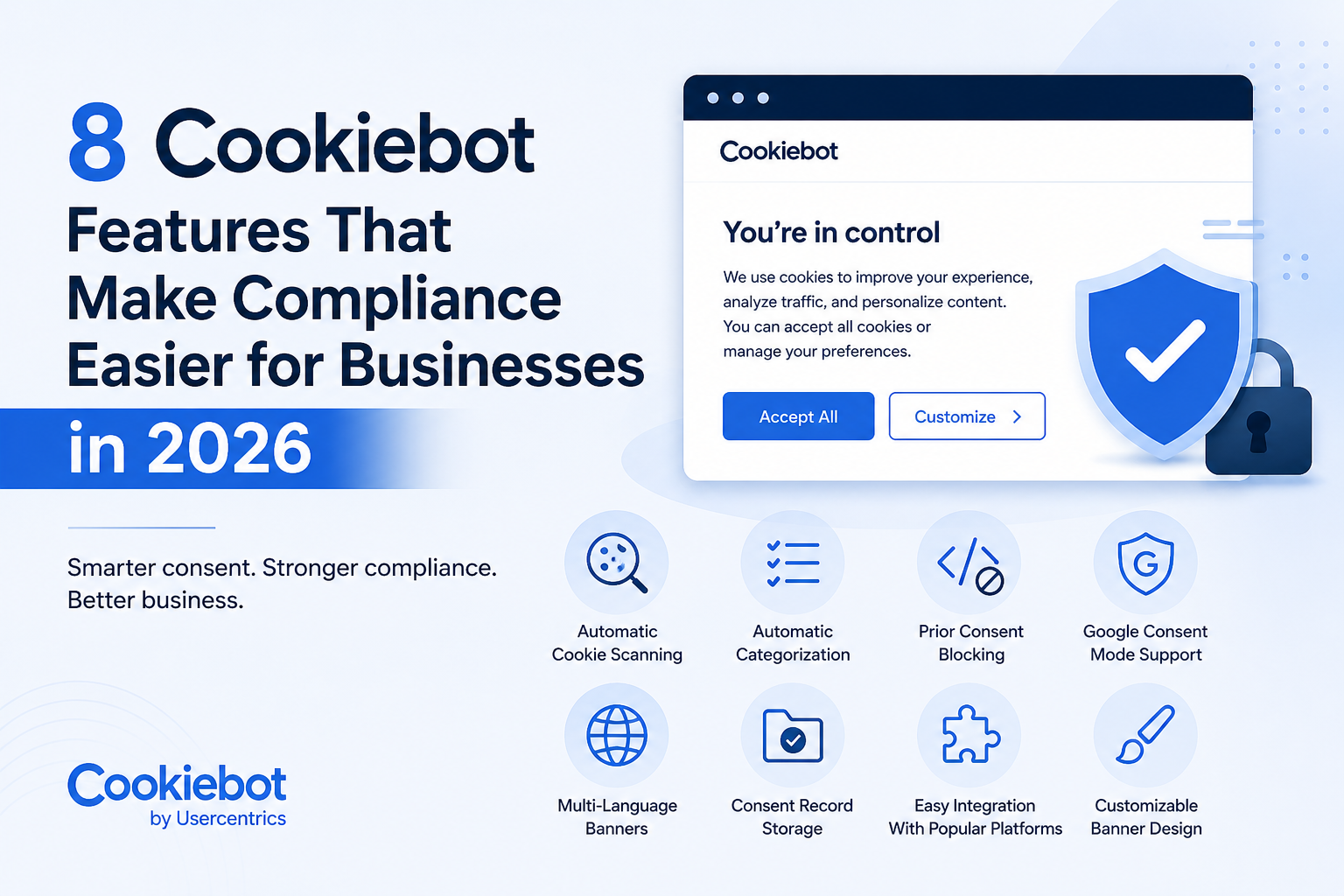
Cookiebot helps businesses simplify privacy operations by automating many of the most time-consuming parts of compliance management. From consent collection to script blocking and documentation, the platform is designed to reduce manual work while improving transparency and regulatory readiness.
The following Cookiebot features are especially valuable for businesses managing modern websites connected to analytics, advertising, ecommerce, and marketing platforms.
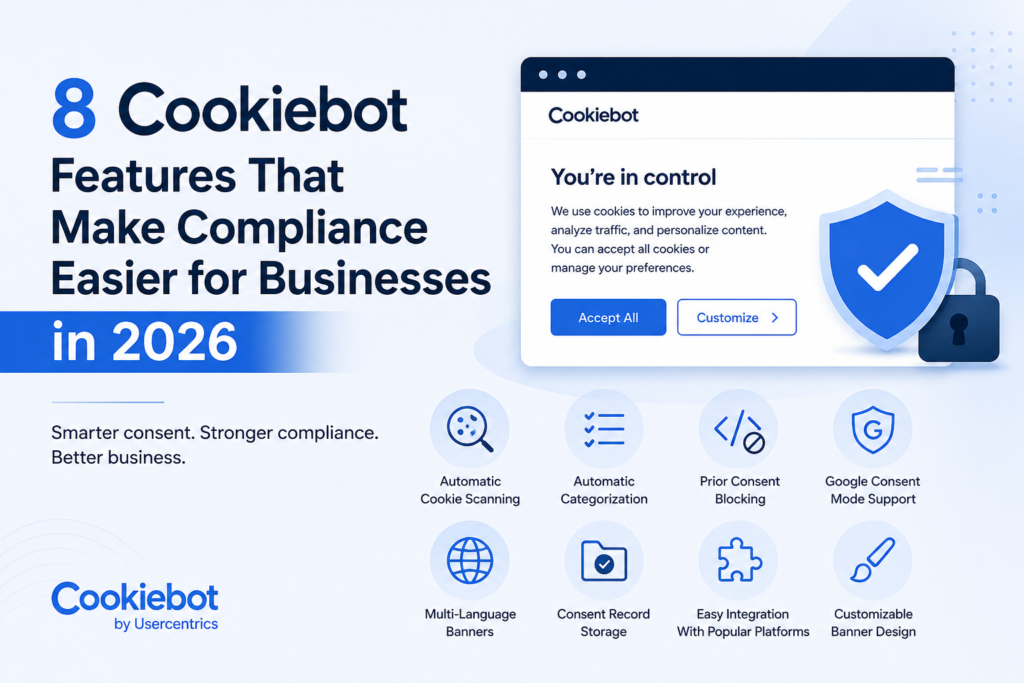
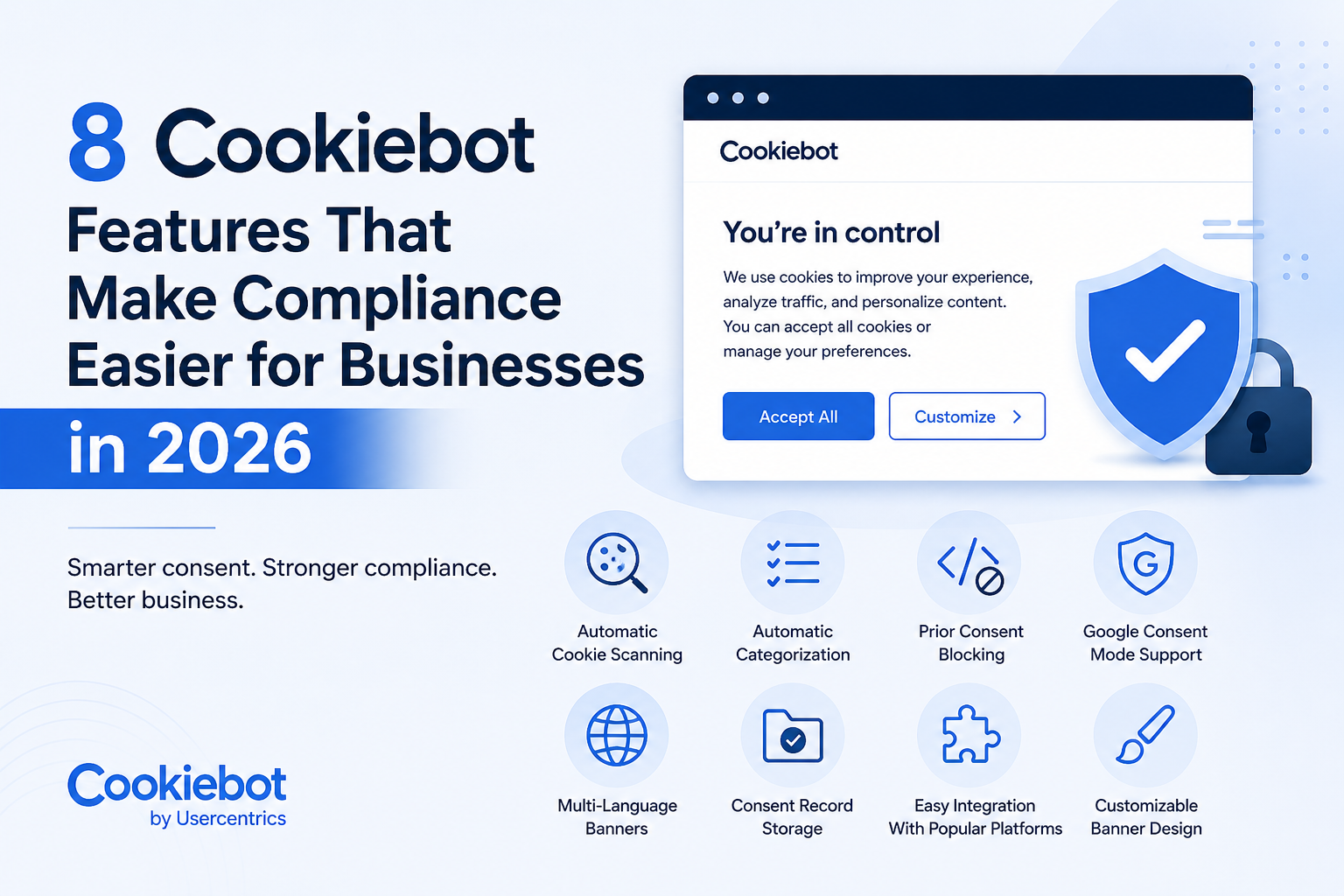
1. Automatic Website Cookie Scanning
One of the biggest compliance challenges businesses face is simply understanding which cookies and trackers are running on their websites.
Modern websites often contain dozens of scripts coming from analytics tools, plugins, embedded content, advertising platforms, and third-party services. Over time, manually tracking these technologies becomes nearly impossible.
Cookiebot automatically scans websites to identify cookies and tracking technologies in use.
For example, an ecommerce business running Meta ads, Google Analytics, TikTok pixels, and live chat tools may unintentionally activate several tracking scripts without realizing it. Cookiebot helps identify these technologies automatically so teams can maintain more accurate compliance controls.
2. Automatic Cookie Categorization for Better Cookie Compliance
Organizing cookies manually can quickly become time-consuming, especially for larger websites.
Cookiebot automatically categorizes cookies into groups such as necessary, preferences, statistics, and marketing. This makes consent banners easier for users to understand while helping organizations maintain clearer compliance structures.
This also improves transparency for users reviewing consent choices.
For example, a SaaS company using multiple analytics and personalization tools can present cleaner consent options instead of overwhelming visitors with technical cookie names that are difficult to interpret.
Research from Cisco Consumer Privacy Survey has consistently shown that consumers increasingly value transparency and control over how companies collect and use personal data.
3. Prior Consent Blocking
Under GDPR and similar regulations, non-essential cookies should not load before users provide consent.
Many websites accidentally violate this rule because tracking scripts activate immediately when pages load.
Cookiebot helps solve this problem by automatically blocking non-essential scripts until visitors approve them. This includes advertising pixels, analytics scripts, remarketing tools, and other marketing trackers.
For organizations using tools like Google Analytics, prior consent blocking is essential for maintaining compliant data collection practices. This is especially important for businesses improving attribution and customer tracking across devices. Some teams also explore GA4 cross-device tracking setup guides when refining privacy-aware analytics workflows.
A business running remarketing campaigns on Meta or Google Ads, for example, may unknowingly collect visitor data before consent if scripts are not properly managed. Cookiebot reduces that risk automatically.
4. Google Consent Mode Support for Privacy Compliance
Google Consent Mode has become increasingly important for businesses that rely on analytics and digital advertising.
Cookiebot fully supports Google Consent Mode, allowing Google services to adapt based on a user’s consent choices.
This helps companies continue measuring campaign performance and conversion activity while still respecting privacy regulations.
Consent-aware tracking is becoming increasingly important for digital advertising.
For example, an ecommerce brand running Google Ads campaigns can still receive modeled conversion insights even when some users decline tracking consent.
Google explains in its official documentation that Consent Mode helps advertisers balance user privacy with measurement capabilities in privacy-focused environments.
5. Multi-Language Consent Banners
Businesses serving international audiences often struggle to provide localized consent experiences.
Cookiebot supports multiple languages and can automatically display consent banners based on the visitor’s preferred language or geographic region.
This improves the user experience while also helping companies strengthen compliance readiness across global markets.
Clear and localized communication also helps improve trust, especially when users are asked to make privacy-related decisions.
For instance, an international ecommerce store serving customers across Europe, Asia, and North America can automatically present consent notices in the user’s local language without manually creating separate systems for each region.
6. Consent Record Storage and Documentation for Cookie Compliance
Many privacy regulations require businesses to demonstrate proof of user consent.
Managing consent records manually can become difficult as website traffic grows.
Cookiebot stores consent records securely and tracks consent history, updates, and withdrawals automatically. This simplifies audit preparation and helps organizations maintain organized compliance documentation over time.
For many teams, automated recordkeeping significantly reduces administrative workload. Organizations managing larger compliance operations often also invest in digital document management for compliance to centralize audit records and regulatory documentation.
For example, a financial services company handling sensitive customer data may need to demonstrate how and when consent was obtained during compliance reviews or regulatory inquiries.
Under GDPR accountability requirements, businesses are expected to maintain documentation that proves lawful consent collection and processing practices.
According to the European Commission’s GDPR overview, organizations must be able to demonstrate compliance with data protection principles and consent requirements.
7. Easy Integration With Popular Platforms
Another reason businesses choose Cookiebot is because implementation is relatively straightforward.
The platform integrates with systems like WordPress, Shopify, Wix, Magento, Webflow, and Google Tag Manager. Businesses can often deploy Cookiebot without building complicated custom solutions.
This makes compliance easier for smaller teams that may not have dedicated developers or large technical resources.
For example, a small ecommerce business using Shopify can implement Cookiebot without hiring a custom privacy compliance developer or rebuilding its tracking infrastructure from scratch.
8. Customizable Consent Banner Design
Compliance tools should not negatively affect website design or customer experience.
Cookiebot allows businesses to customize consent banners so they align with branding, layout, and overall website design.
Companies can adjust messaging, placement, button styles, and appearance without sacrificing compliance functionality.
This flexibility helps organizations create privacy experiences that feel more professional and less disruptive for visitors.
For example, a premium brand focused heavily on user experience can design a consent banner that feels visually consistent with the rest of the website instead of displaying a generic popup that hurts brand perception.
User experience matters because intrusive or poorly designed consent banners can negatively affect engagement and conversion rates.
Why Cookiebot Features Matter for Website Privacy Compliance
Privacy compliance is no longer separate from marketing and analytics operations. Businesses need systems that support compliance while still allowing compliant measurement and advertising attribution.
Cookiebot helps companies balance those goals by combining automated consent management with integrations designed for modern marketing ecosystems.
Instead of treating compliance as a standalone legal issue, organizations can use Cookiebot to build more transparent and trustworthy digital experiences.
How to Get Started With Cookiebot for Cookie Compliance
Most businesses begin by connecting their website domain and running an automatic scan to identify cookies and tracking technologies currently active on the site.
After that, consent settings, regional privacy preferences, and banner configurations can be customized based on business requirements and applicable regulations.
Implementation is typically handled through a direct script installation or CMS integration depending on the platform being used.
Businesses using WordPress, Shopify, or Google Tag Manager can often complete initial setup relatively quickly compared to building custom consent systems manually.
Teams researching broader compliance strategies may also explore guides related to website privacy compliance checklists, GDPR compliance tools, and Google Consent Mode implementation best practices.
Frequently Asked Questions (FAQ)
What Is Cookiebot Best For?
It is best known for automating cookie consent management and simplifying website privacy compliance. Businesses commonly use it to manage GDPR and CCPA requirements while maintaining analytics and advertising workflows.
Does Cookiebot Support GDPR and CCPA?
It supports GDPR, CCPA/CPRA, DMA, LGPD, and several other major privacy regulations. The platform is designed to help businesses manage consent requirements across multiple regions and legal frameworks.
Is Cookiebot Difficult to Install?
No. Most businesses can install Cookiebot relatively quickly using plugins, integrations, or script deployment. Platforms like WordPress, Shopify, and Google Tag Manager make implementation easier for non-technical teams.
Does Cookiebot Work With Google Tag Manager?
Yes, the platform integrates with Google Tag Manager to help businesses manage consent-aware tracking workflows and control which scripts load before user consent is granted.
Is Cookiebot Suitable for Small Businesses?
Yes, it is commonly used by startups, ecommerce stores, agencies, and enterprise organizations because it scales across different business sizes and website requirements.
Does Cookiebot Affect SEO or Website Performance?
The platform is designed to minimize performance impact while managing consent workflows. Proper consent management can also help businesses avoid compliance-related issues that may negatively affect user trust and long-term website performance.
Can Cookiebot Block Tracking Scripts Automatically?
Yes. Cookiebot can automatically block non-essential tracking scripts until visitors provide consent. This helps businesses comply with GDPR requirements related to prior consent.
Does Cookiebot Support Multi-Language Websites?
It supports multiple languages and can automatically display consent banners based on a visitor’s language or region. This is especially useful for businesses serving international audiences.
Can Businesses Customize the Cookie Banner Design?
Businesses can customize the appearance, messaging, placement, and layout of Cookiebot consent banners so they align with branding and website design standards.
Why Are Consent Records Important?
Consent records help businesses demonstrate compliance during audits or regulatory reviews. Cookiebot automatically stores consent history and documentation, reducing manual administrative work for businesses.
Final Thoughts
Privacy compliance is no longer optional for businesses operating online. As regulations continue evolving and consumers become more aware of how their data is collected, companies that ignore compliance risks may face legal exposure, reputational damage, declining customer trust, and disrupted marketing operations.
Modern businesses need more than a simple cookie banner. They need systems that can actively manage consent, control tracking technologies, maintain documentation, and adapt to changing privacy standards without creating operational complexity.
That is why platforms like Cookiebot have become increasingly important. Instead of relying on manual processes or outdated consent tools, businesses can automate critical compliance workflows while still supporting analytics, advertising, and customer experience goals.
Features like automatic cookie scanning, prior consent blocking, consent record storage, and Google Consent Mode support help businesses stay proactive rather than reactive as privacy requirements continue tightening globally.
Compliance is also becoming a competitive advantage. Businesses that demonstrate transparency and respect for user privacy are more likely to build long-term customer trust and stronger digital relationships.
If your business is still relying on manual cookie banners or outdated consent tools, now is a good time to modernize your compliance strategy. Try Cookiebot for free and see how automated consent management can help simplify compliance while supporting a better customer experience.
More on this topic
Browse all 79 articles on Security & Compliance.