AI is transforming beauty subscription services by delivering products tailored to individual preferences. Through data analysis - like quizzes, purchase history, and even weather conditions - brands can recommend personalized items that match skin type, lifestyle, and beauty goals. This approach not only improves customer satisfaction but also boosts business performance with subscription management software with higher order values, conversion rates, and retention.
Key points:
- Data-driven personalization: AI uses quizzes, purchase behavior, and feedback to create dynamic customer profiles.
- Improved recommendations: Techniques like collaborative filtering, content-based filtering, and predictive analytics ensure precise product matches.
- Business growth: Companies report up to 30% higher order values and 50% better conversion rates.
- Customer benefits: Saves time, reduces unwanted products by 30%, and enhances the shopping experience.
AI-powered personalization is reshaping the beauty industry, making every subscription box feel custom-made while driving measurable results for brands.
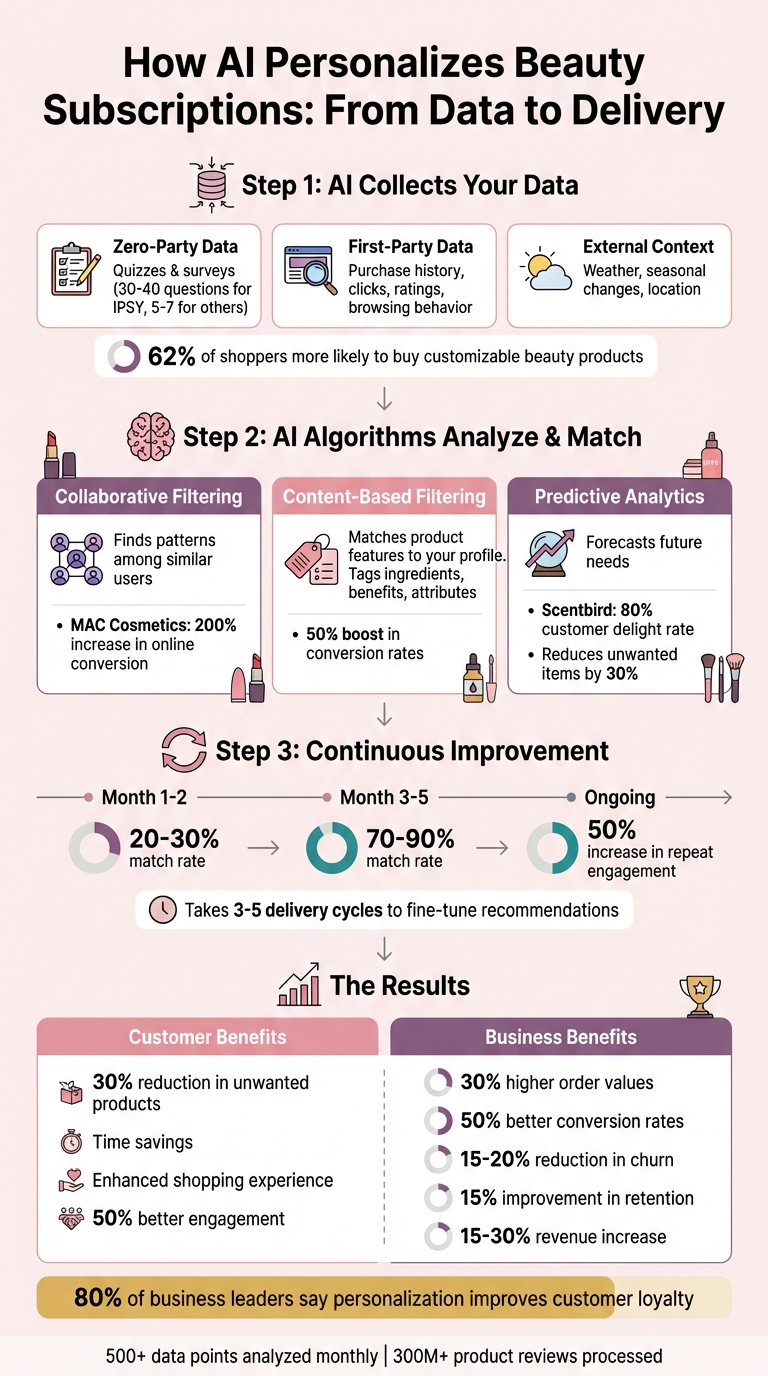
How AI Personalizes Beauty Subscriptions: Data Collection to Product Delivery
The World’s First Conversational AI for Beauty Is Here – See It in Action! 💄🤖
sbb-itb-d1a6c90
How AI Collects and Analyzes Customer Data
AI-powered beauty subscriptions depend on three main data sources to figure out what each customer wants. The first is zero-party data - information customers willingly share through quizzes and surveys. The second is first-party data, which tracks customer behavior, like what they buy, click on, or rate. The third is external context, which includes factors like local weather or seasonal changes that might influence skin needs. Together, these data streams fuel personalized product recommendations and broader e-commerce strategies.
Customer Preference Surveys and Quizzes
When you join an AI-driven beauty subscription, you’re often asked to take a detailed quiz. These surveys gather information about your skin type, hair concerns, ingredient preferences, and beauty goals. The data collected here forms a "dynamic profile" or "skin profile", which serves as the backbone of the recommendation system. The length of these quizzes can vary - IPSY, for example, uses 30–40 questions, while others might only ask 5–7.
Machine learning then gets to work, finding patterns that link specific concerns (like redness or acne) with proven ingredients (like niacinamide or salicylic acid). Some advanced systems even combine your text responses with selfie analysis to evaluate skin texture, pigmentation, and hydration levels. This process matters because 62% of shoppers are more inclined to buy a beauty product if they can customize it to their needs. AI doesn’t stop there - it continues to track user interactions to refine these initial insights.
Tracking Purchase Behavior and Feedback
Once the quiz is over, AI systems keep an eye on how you engage with products. They analyze your browsing history, click patterns, past purchases, and even social media activity (like likes and shares) to uncover preferences you might not even realize you have. For example, Ulta Beauty’s loyalty program - boasting over 64 million members and accounting for 95% of total sales - acts as a "living feedback loop", capturing behavior and intent across millions of transactions.
Post-delivery ratings are especially valuable. When you rate a product as "like" or "dislike", the AI uses that feedback to either prioritize similar items or filter out unwanted ones. Scentbird, for instance, achieved an 80% "delight rate" by combining user scent profiles with past purchase data and aggregated feedback. Sentiment analysis on written reviews also helps the AI detect emotions, which can guide future product recommendations and even influence product development. Over time, this constant feedback turns into improved personalization.
Using Feedback Loops for Continuous Improvement
Feedback loops take the data from your initial quiz and evolve it into a profile that adjusts to your changing preferences, lifestyle, and seasonal needs. It usually takes 3–5 delivery cycles for the AI to fine-tune its recommendations, with match rates jumping from 20–30% in the second month to 70–90% by months four and five.
Every product rating - whether positive or negative - helps the algorithm pick up on subtle style preferences. Some systems even let users upload photos over time to track skin changes, allowing the AI to update skincare suggestions in real time. This ongoing refinement can cut down unwanted subscription items by 30% and increase repeat engagement by 50%.
AI Algorithms That Power Personalization
AI algorithms make every beauty box feel tailor-made by matching products to individual preferences. These systems dig deeper than just age or skin type - they analyze behavior, predict needs, and learn from vast amounts of data collected across entire customer bases. At the heart of this personalization are three key techniques: collaborative filtering, content-based filtering, and predictive analytics. Each plays a distinct role in transforming raw data into curated beauty experiences.
Collaborative Filtering for Recommendations
Collaborative filtering finds patterns among a large group of users. Instead of focusing only on your individual history, it identifies what similar customers liked and uses that to recommend products. For example, if you and another subscriber both love a vitamin C serum and they give a retinol cream a high rating, the system is likely to suggest that retinol cream to you as well.
This technique is especially useful for new subscribers. Even if someone is just starting out, the AI can make solid recommendations by matching them with users who share similar quiz answers, skin concerns, or shopping habits. Every interaction - ratings, reviews, clicks - feeds back into the system, making future recommendations sharper for everyone. For instance, MAC Cosmetics saw a 200% increase in online conversion rates after implementing AI systems that leverage this kind of collective data.
"Netflix has tons of insights they've generated about your viewing habits - what other things you've clicked on, how long you watch different things for - and they use that to inform their curating decisions a year from now. And similarly, we're doing this in the world of consumer products." - Michael Bourkhim, Co-founder and co-CEO, FabFitFun
What makes collaborative filtering stand out is its ability to go beyond static categories. It adapts to changing preferences and even picks up on "psychographics" - details like lifestyle choices, aesthetic tastes, or emotional connections to certain product types. Nearly 80% of business leaders say that this type of personalization helps improve customer loyalty. The next layer of personalization comes from content-based filtering, which focuses on the products themselves.
Content-Based Filtering for Product Matching
Content-based filtering takes a different approach. Instead of comparing you to others, it matches products directly to your profile based on their features. Every product is tagged with metadata - ingredients like niacinamide or hyaluronic acid, benefits like anti-aging or oil control, and attributes like cruelty-free or vegan. The AI then aligns these tags with your specific concerns.
For example, if your quiz highlights redness as a concern and a preference for clean beauty, the system will prioritize items with soothing ingredients and ethical certifications. Some systems even use AI-powered image analysis to verify self-reported data, further refining the matches. This combination of quiz data and image recognition can boost conversion rates by up to 50%.
External factors also come into play. If you live in a dry region, the AI might suggest richer moisturizers. During winter, it could swap lightweight formulas for heavier creams. Brands using this level of AI personalization often see a 20–30% increase in average order value and a 15% improvement in customer retention. Unlike collaborative filtering, this method doesn’t require a large pool of user data - it focuses solely on the product characteristics.
Predictive Analytics for Anticipating Customer Needs
Predictive analytics takes things a step further by forecasting what you’ll need before you even realize it. The AI examines your usage patterns - how quickly you go through products, how often you reorder, and how your ratings shift over time - to send timely replenishment reminders. It also adapts to changes in your preferences. For instance, if you start favoring hydrating serums during the winter, the system adjusts future recommendations accordingly.
Machine learning identifies links between behaviors and products, enabling proactive suggestions. Scentbird, a fragrance subscription service, uses predictive analytics to combine scent profiles with purchase history and reviews, achieving an 80% customer delight rate. Similarly, in 2025, Australian skincare brand Skinwise integrated predictive AI and saw their average basket size grow by 17%, with conversion rates climbing by up to 50%.
This approach also helps reduce churn. By identifying products that might lead to dissatisfaction, AI can cut the delivery of unwanted items by 30% and reduce customer churn by 15–20%. Birchbox uses machine learning to predict which unreleased products will resonate with subscribers based on their evolving preferences in categories like skincare and hair care. This shift from reactive curation to proactive discovery keeps customers engaged and excited.
Together, these algorithms create a seamless system that personalizes every beauty subscription down to the last detail.
Examples of Personalized Beauty Subscriptions
Some beauty subscription brands have mastered the art of personalization through AI. From analyzing vast product catalogs to using advanced visual tools for perfect shade matching, these companies ensure their offerings feel tailored to each customer. Here’s a closer look at how they do it.
FabFitFun's Seasonal Box Customization
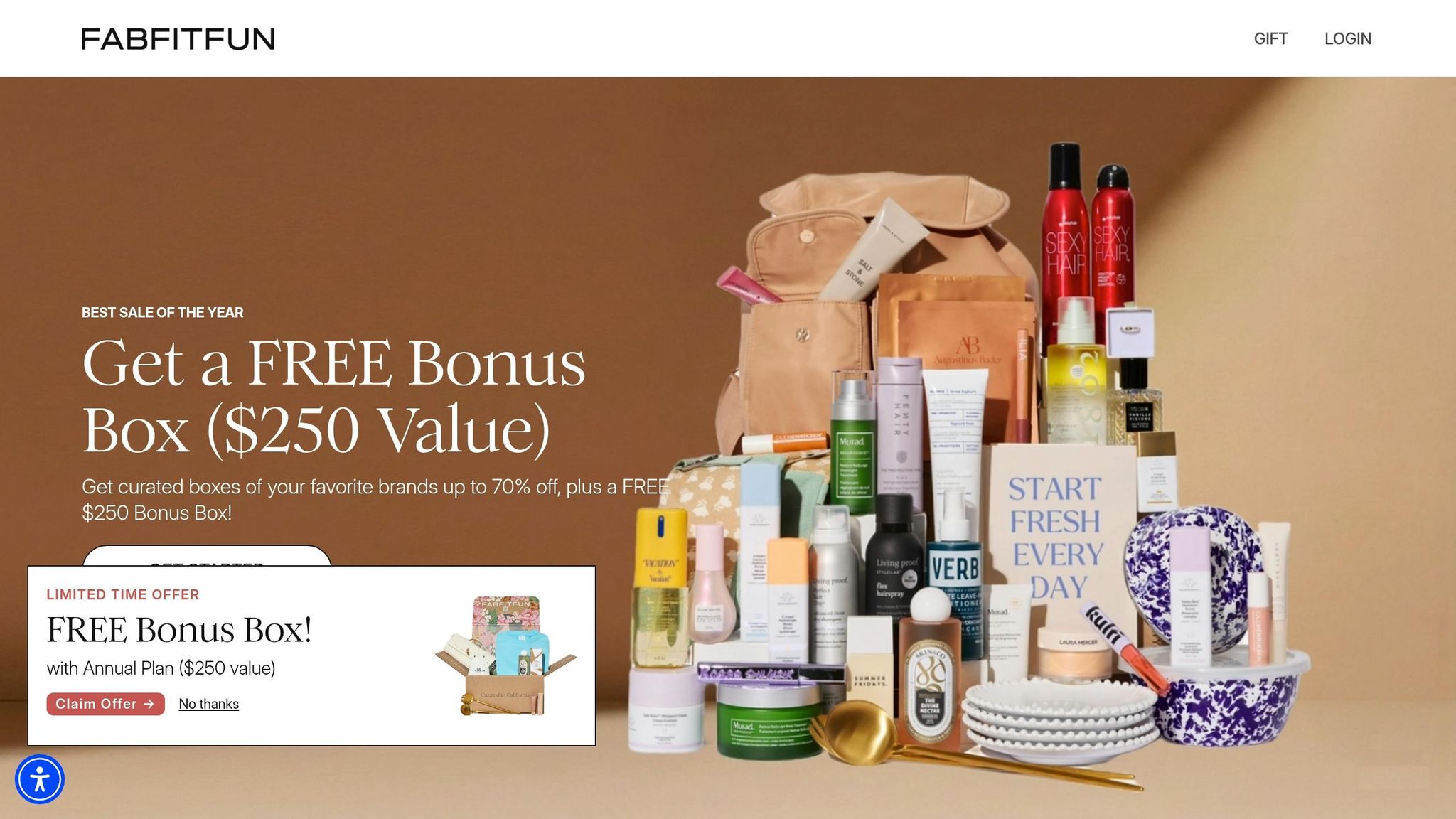
FabFitFun serves over 1 million members with seasonal boxes, generating annual revenue of more than $200 million and an estimated valuation of $1 billion by 2024. To manage this scale, the company developed proprietary technology capable of handling thousands of SKUs - far beyond the capabilities of standard e-commerce platforms. Their in-house kitting facility allows for millions of unique box variations, ensuring no two boxes are identical unless specifically designed to be.
The AI behind FabFitFun uses subscriber data to guide product curation for future boxes, taking a page from data-driven models like Netflix. Co-founder and co-CEO Michael Broukhim explains:
"We're using the loop behind customer inquiries, social chatter, and chatter in our community forums to help us spot issues very effectively and start categorizing and tagging those using AI".
This feedback loop not only improves personalization but also helps partner brands identify products likely to resonate with customers. Members pay $49.99 per season for boxes valued at over $200, showcasing how AI-powered customization delivers both value and a tailored experience.
IPSY's AI-Driven Beauty Quizzes
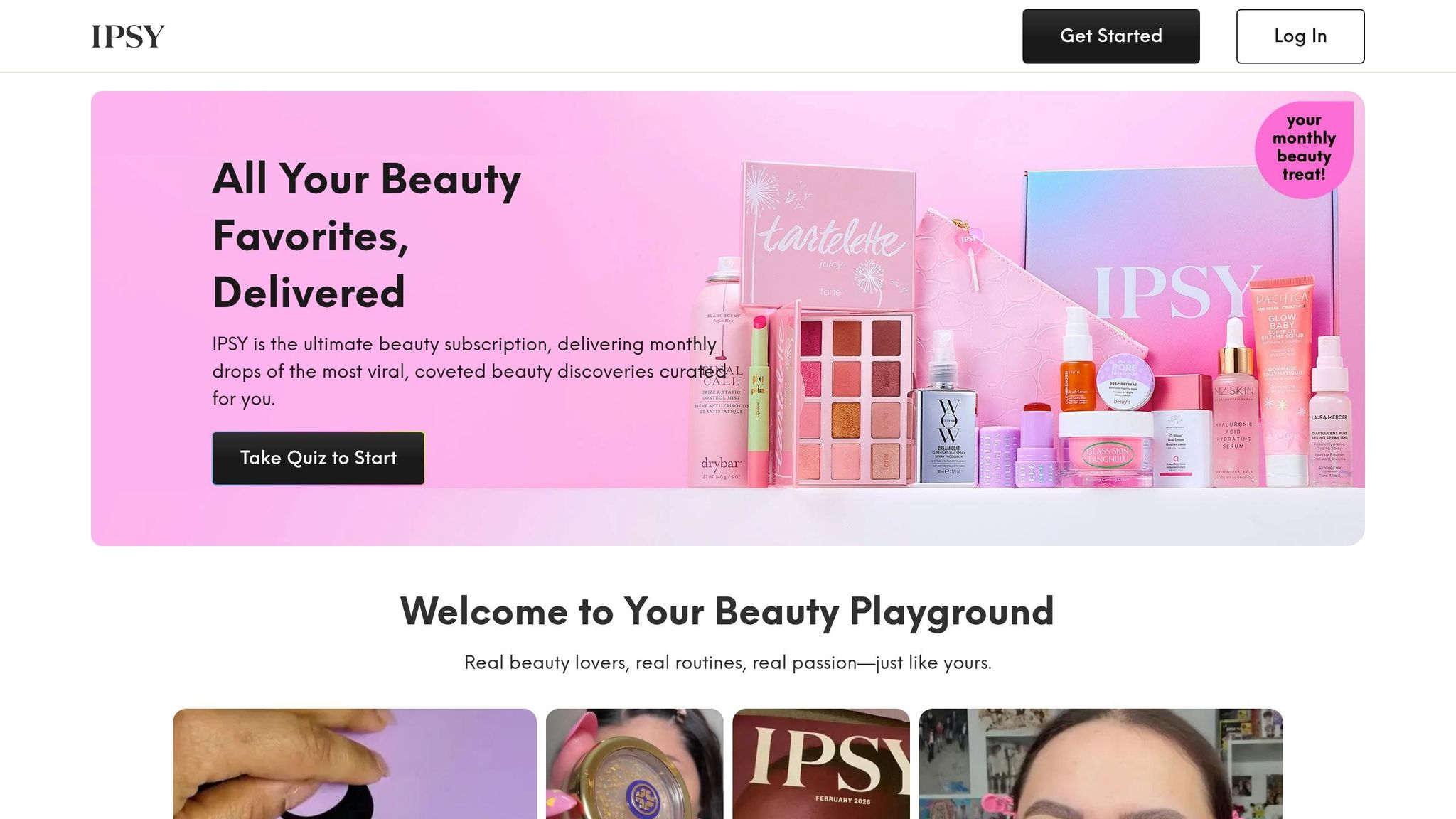
IPSY’s personalization starts with its AI-powered Beauty Quiz, which gathers details like skin type, tone, hair color, makeup preferences, and favorite product categories. Each response is weighted in a scoring model to predict product affinity. As Senior Manager of Editorial Maddie Aberman notes:
"Your Beauty Quiz is the engine that drives everything personalized".
The system processes over 500 data points monthly to match subscribers with tens of thousands of products. For premium subscriptions, members can choose from a curated "Choice" menu of 12–18 highly relevant items. What makes IPSY’s system even smarter is its ability to learn from nearly 300 million product reviews, continuously refining its recommendations. Subscribers can update their quiz anytime to reflect changing preferences or seasonal needs. Prices start at $14 per month for the Glam Bag, with higher tiers offering full-size products valued up to $400. This thorough data-driven approach ensures highly accurate product matching.
Madison Reed's Shade-Matching AI
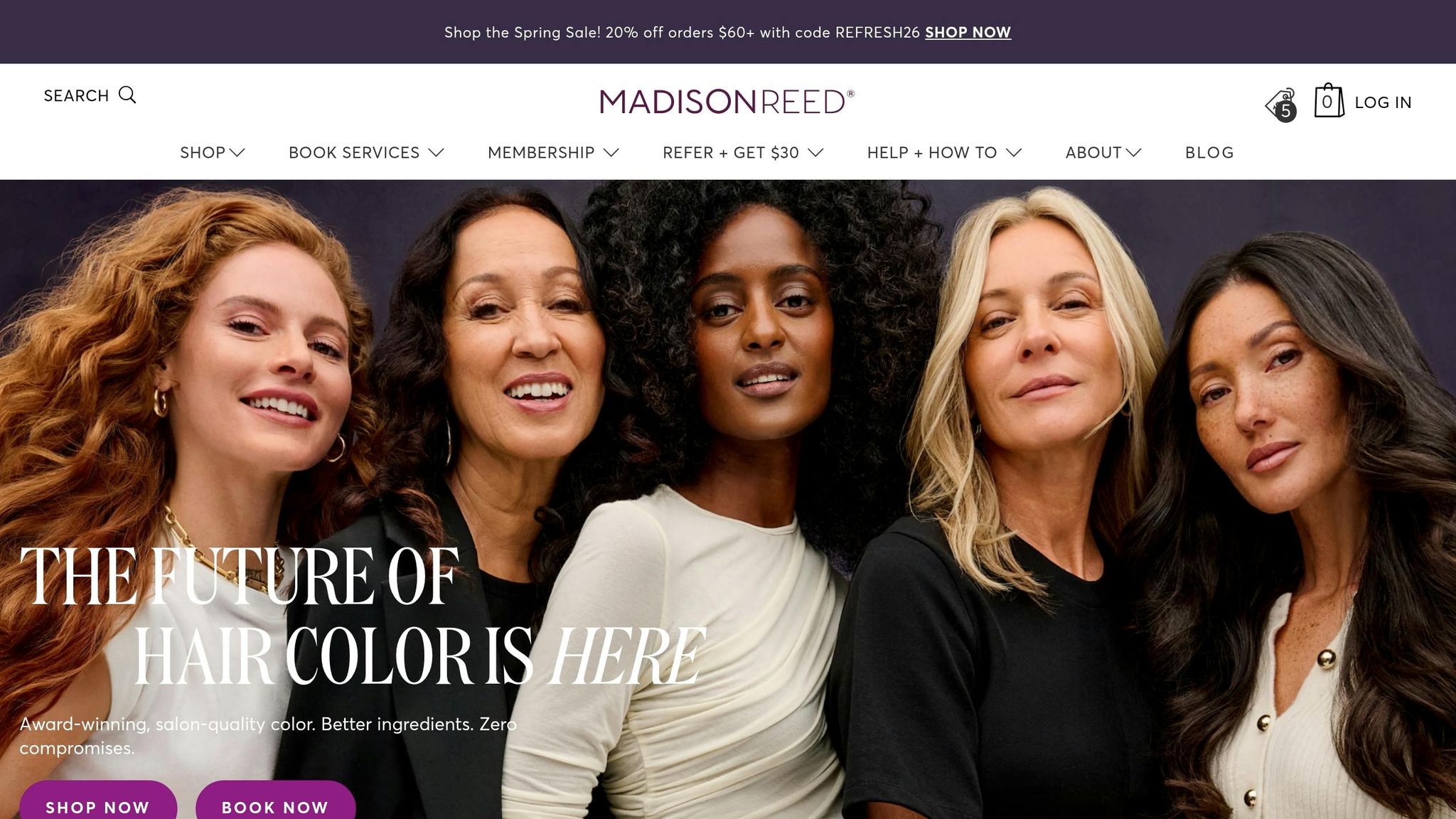
Madison Reed takes a different approach by using visual analysis to personalize hair color recommendations. Their AI agent, Madi, acts as a virtual colorist available 24/7 via web, chat, and SMS. The process starts with customers uploading a selfie, which Madi analyzes using computer vision to identify primary and secondary hair tones. Initially, the company used an 18-question quiz, but the AI found that just five key questions were enough for accurate shade predictions. Combining photo analysis with quiz responses, Madi recommends the best shade along with alternative options.
This use of computer vision highlights AI’s role in enhancing personalization. After nine months of testing, Madison Reed officially launched Madi in October 2025 in partnership with AI firm Sierra. The results were dramatic: subscription cancellations dropped by half, chat interactions increased 30×, and bookings at the brand's 97 hair color bars doubled. CEO and Founder Amy Errett shared:
"What set [Sierra] apart wasn't just the tech - it was how intentionally they worked with us to make sure Madi felt like Madison Reed".
With data from 20 million unique hair profiles, Madison Reed now generates about 70% of its revenue from memberships. Hair color kits are priced between $34.00 and $35.00, with subscribers receiving discounts on every purchase.
How to Implement AI for Beauty Subscription Personalization
Creating an AI-driven beauty subscription service starts with collecting high-quality data, selecting AI platforms tailored to your needs, and incorporating subscription management tools. The foundation of this process lies in gathering accurate and comprehensive customer data.
Step 1: Set Up Data Collection Tools
The effectiveness of your AI system depends on the quality of the data it receives. Start by using quizzes and surveys to gather explicit customer preferences, such as skin type, hair concerns, and makeup choices. Tools like Askflow AI ($29/month for 500 engagements) and Zigpoll can help you create user-friendly, no-code question flows.
Enhance these efforts with AI-powered skin analysis. Allow customers to upload selfies through their phone cameras to assess factors like hydration, texture, redness, and visible concerns such as acne or fine lines. Additionally, track customer behavior - purchase history, browsing patterns, time spent on product pages, and wishlist activity - to uncover implicit preferences.
Feedback loops are another valuable tool. In-app prompts or periodic polls can help refine product recommendations, reducing unwanted items in subscription boxes by up to 30%. Dr. Frauke Neuser, Principal Scientist at Olay, highlights the importance of understanding customer needs:
"Olay's research shows that browsing the shelf is the #1 purchase influencer for women, yet one-third of women do not find what they are looking for".
Once you have a strong data collection system in place, the next step is selecting an AI platform that matches your subscription model.
Step 2: Choose the Right AI Platforms
Opt for AI platforms that are specifically trained for the beauty industry. Solutions like Orbo AI and GlamAR come pre-loaded with data on diverse skin tones, facial structures, and hair types, making them easier to implement without extensive customization.
Your choice of platform should also align with your sales strategy. For e-commerce, features like virtual try-ons, quiz engines, and CRM integration are essential. Retail-focused businesses, on the other hand, may benefit more from tools like smart mirrors and tablet-based advisor systems. Ensure that the platform you select offers SDKs and APIs compatible with your existing backend - whether it’s Shopify, WooCommerce, or a custom setup - to avoid unnecessary development costs.
For example, the Australian skincare brand Skinwise used Inference Beauty’s AI-powered skincare finder to increase basket sizes by 17% and boost conversion rates by up to 50%. Before fully committing, test the platform with a small pilot project, such as adding AI recommendations to a single product page, to evaluate its performance. With the global beauty tech market projected to reach $8.9 billion by 2026, investing in the right AI solution now can set your business up for growth.
Once your AI system is in place, integrating a subscription management tool is key to bringing personalization to life.
Step 3: Use Subscription Management Tools
Subscription management tools collect and organize customer data, feeding it into your AI system to guide personalized product recommendations.
Take FabFitFun as an example. Serving over one million members, they use Recurly for their subscription infrastructure while layering in custom features for personalized curation. Co-founder Michael Broukhim explains:
"Recurly has an amazing subscription platform that helps us with a ton of the stack".
For smaller brands, platforms like BizBot offer cost-effective solutions that simplify operations and reduce the need for custom development. These tools sync with e-commerce platforms, keeping catalogs, inventory, and order statuses up to date, which ensures AI recommendations are accurate and actionable.
Look for subscription tools with features like automated payment retries to recover failed transactions. This is especially important because personalized AI curation can reduce customer churn by 15–20%. By integrating subscription management with AI analytics, you can quickly identify and address issues, refine your product offerings, and drive both customer retention and revenue growth.
How to Measure AI Personalization Success
When it comes to gauging the success of AI-powered personalization, metrics like retention, revenue, and engagement take center stage. These numbers provide a clear picture of whether your AI is delivering results - keeping customers loyal, driving spending, and encouraging interaction with personalized recommendations.
Retention Rates and Customer Satisfaction
Retention rates are one of the clearest indicators of how well your AI is performing. By tracking subscriber activity at intervals like 3, 6, and 12 months, you can pinpoint trends. It's also essential to differentiate between voluntary churn (customers leaving because they're dissatisfied) and involuntary churn (like failed payments) to focus your efforts where they matter most.
AI has the potential to significantly reduce churn. For instance, personalization can cut churn rates by 15–20%, while brands using enriched customer profiles see churn drop by 25% overall. A standout example is Ulta Beauty, which reported an 11.8% rise in net sales and strong e-commerce growth in March 2026. This success was fueled by AI-driven marketing tools and features like "Replenish & Save" auto-subscriptions. By unifying scattered data into centralized profiles, Ulta achieved a 95% repeat customer rate through real-time, tailored recommendations.
Another important measure is the decrease in product returns. When AI accurately matches products to customer preferences, return rates can drop by as much as 30%. High retention doesn’t just keep customers around - it also sets the stage for greater revenue gains.
Subscription Revenue Growth
Customer Lifetime Value (LTV) is a critical metric for understanding how much revenue a subscriber brings in over the course of their relationship with your brand. AI personalization enhances LTV by keeping customers engaged longer and encouraging additional purchases or upgrades. Aim for an LTV-to-CAC (Customer Acquisition Cost) ratio of 3:1 for a sustainable model.
Personalized strategies can have a dramatic impact. For example, tailored beauty routines can lead to repeat purchase rates that are 2.5x higher. Companies using advanced personalization techniques generate 40% more revenue compared to static approaches. No7 Beauty Company offers a real-world example: in November 2024, they launched an AI Skincare Advisor in collaboration with Revieve, resulting in a 3.6x boost in conversion rates and a 48% jump in Average Order Value (AOV). Similarly, JCPenney saw a 108% increase in conversion rates for mass brands and a 23% rise in AOV for skincare users after introducing AI-powered advisors.
Another key metric to track is Gross Margin per Box, which measures profitability by subtracting the cost of goods, shipping, and packaging from revenue. A healthy margin of over 40% is a solid benchmark.
Engagement Metrics and Feedback Analysis
Beyond revenue, engagement metrics help you understand how well your AI features are capturing attention. Key indicators include time spent on product pages, quiz completion rates, and clicks on personalized recommendations. For example, in November 2024, JCPenney customers spent 103% more time on-site when interacting with AI-driven skincare and haircare advisors.
Monitoring campaign engagement rates and predictive journey responses - like reminding customers to reorder before they run out - can also reveal how effectively your AI anticipates customer needs. Metrics like "intent engagement" shed light on whether your system is correctly predicting actions before they happen.
"Personalization is the key to unlocking our future success, and to do this well means we need to apply data and decisioning alongside campaign activation" – Kelly Mahoney, CMO, Ulta Beauty
Customer feedback is equally valuable. Use in-app surveys or prompts to ask customers if they were satisfied with their selections. This feedback loop not only improves your AI models but also reduces unwanted items in subscription boxes by up to 30%. For example, Skinwise, an Australian skincare brand, leveraged user data to deliver tailored recommendations, increasing basket sizes by 17% and boosting conversion rates by up to 50%.
Conclusion
AI has reshaped beauty subscription services, turning one-size-fits-all boxes into highly personalized experiences tailored to individual needs. By analyzing factors like skin concerns, purchase history, environmental conditions, and real-time feedback, AI ensures subscribers receive products that feel handpicked just for them. This level of customization isn't just a bonus anymore - it’s what customers expect. In fact, 80% of consumers are more likely to shop with brands that offer personalized experiences.
The business benefits of AI-driven personalization are equally striking. Companies using these tools report revenue increases of 15% to 30% and experience fewer product returns. Beyond boosting sales, AI helps retain customers by predicting reorders, reducing decision fatigue, and building trust through relevant recommendations. Nearly 80% of business leaders agree that deep personalization improves customer retention.
Arbelle states: "Personalization is no longer a trend in beauty – it's a baseline expectation and a revenue imperative."
The formula for success combines smart data collection, advanced AI filtering, and efficient subscription management. For brands looking to adopt or refine AI-driven personalization, the key steps include gathering high-quality data through quizzes and feedback, selecting platforms that support collaborative and content-based filtering, and using tools like BizBot to streamline operations and reduce technical hurdles.
With AI handling complex data analysis and prediction, beauty brands can focus on delivering products that customers love. Subscription services powered by AI ensure every box feels like it was made just for the recipient, keeping customers engaged and satisfied month after month.
FAQs
What data does AI use to personalize my beauty box?
AI takes beauty subscriptions to the next level by personalizing your beauty box based on a mix of factors. It looks at details like your skin type, specific concerns, personal preferences, and even your purchase history and browsing habits. Beyond that, it can factor in external elements like the local climate and trending products. Some systems even analyze facial features to suggest products and routines that match your unique needs. The result? A subscription box that's perfectly tailored just for you.
How is my personal data kept private and secure?
Your personal data is safeguarded by AI systems that implement protective measures during both collection and analysis. However, it's important to recognize potential risks, like unauthorized data access or cybersecurity weaknesses. Staying informed about how your data is managed and understanding privacy policies can go a long way in keeping it secure.
How long does it take for recommendations to get accurate?
AI-driven beauty subscriptions often need time to fine-tune their recommendations. They rely on collecting and analyzing user preferences, which typically takes several weeks or even months. The speed and accuracy of this process depend on how advanced the system is and how much data it can gather during that period.