
Robo-advisors have made managing retirement investments easier and more cost-effective. For retirees, these platforms offer tools for income planning, low fees, and automated portfolio management.
This shift reflects a broader move toward automation in financial planning, helping retirees simplify complex investment decisions while reducing manual effort. As more financial processes become automated, understanding how technology improves efficiency can provide additional advantages, especially when managing multiple financial tools and strategies. You can explore this further in our guide on how to make your business more efficient with automation.
Here’s a quick look at the top options for 2025:
- Betterment: Offers retirement income planning and tax-loss harvesting. $5 a month below $24,000, or 0.25% a year above it.
- Vanguard Digital Advisor: 0.20% gross fee on the index portfolio, reduced by revenue credits; $100 minimum; drawdown calculators.
- Schwab Intelligent Portfolios: No advisory fee, $5,000 minimum, and risk-adjusted portfolios. The Premium tier has been discontinued.
- Wealthfront: Includes tax-loss harvesting and a 0.25% fee.
- Fidelity Go: Free below $25,000, then 0.35% a year on the whole balance. No minimum to open.
- SoFi Automated Investing: Charges 0.25% – SoFi is no longer fee-free – plus access to financial planners as a member benefit.
- Merrill Guided Investing: Combines automation with advisor access. 0.45% online, or 0.85% with an advisor.
A note on the fees below. Every figure was checked against the provider’s own page in August 2026, with the plan name stated. Advisory fees are annual and sit on top of the expense ratios of the funds you hold. Several figures previously published in this article were wrong or contradicted each other; those corrections are flagged where they occur. Confirm the current rate with the provider before you move money.
Each platform caters to different needs, from low fees to human advisor access. Choose one based on your retirement goals, portfolio size, and need for personalized advice.
Quick Comparison
| Robo-Advisor | Minimum Investment | Annual Fee | Human Advisor Access | Key Features |
|---|---|---|---|---|
| Betterment | $0 | $5/mo under $24k, else 0.25% | Yes (Premium Plan) | Retirement planning, tax-loss harvesting |
| Vanguard Digital Advisor | $100 | 0.20% gross (index), net is lower | No | Low fees, retirement calculators |
| Schwab Intelligent Portfolios | $5,000 | 0% advisory fee | No – Premium discontinued | Risk-adjusted portfolios, no advisory fee |
| Wealthfront | Not published | 0.25% | No | Tax-loss harvesting, automated tools |
| Fidelity Go | $0 to open | Free under $25,000, then 0.35% on the full balance | No | Free for small accounts, easy to use |
| SoFi Automated Investing | Not published | 0.25% | Yes | Financial planner access as a member benefit |
| Merrill Guided Investing | $1,000 growth / $50,000 income | 0.45% online, 0.85% with an advisor | Yes | Advisor access, tax-efficient strategies |
Pick the one that fits your needs and budget for a stress-free retirement investment experience.
What Retirees Should Look for in Robo-Advisors
When selecting a robo-advisor for retirement, it’s all about finding features that align with your financial priorities at this stage of life. Unlike younger investors who focus on growing their wealth, retirees need tools that emphasize income generation, capital preservation, and smart withdrawal strategies.
One of the most important features? Retirement income planning tools. These tools help you determine how much you can safely withdraw each year without draining your savings too quickly. For example, platforms like Betterment and Vanguard Digital Advisor offer retirement income calculators that can project your future income needs and simulate various withdrawal scenarios. These insights can make a big difference in ensuring your money lasts.
Next up: fees. Low management fees are crucial because every dollar spent on fees is one less dollar for your retirement income. Even a small difference – like 0.25% – can have a noticeable impact over time. Schwab Intelligent Portfolios charges no advisory fee at all, while Vanguard Digital Advisor charges a modest 0.20% annually. Meanwhile, Fidelity Go takes it a step further by offering free management for accounts under $25,000.
Ease of use is another key factor. Managing your day-to-day expenses shouldn’t feel like a chore, so look for platforms with intuitive dashboards and highly-rated mobile apps. Fidelity Go is often singled out here for a clean interface. App-store ratings previously quoted in this article have been removed: they move constantly and the versions published here could not be traced to a source. Check the current ratings yourself if they matter to you.
For more complex retirement decisions – like tax planning, estate planning, or optimizing Social Security – having access to human financial advisors is invaluable. Betterment Premium includes unlimited access to certified financial planners, at a higher fee. SoFi offers financial planner access as a member benefit alongside its automated investing account.
| Feature | Why It Matters for Retirees | Top Performers |
|---|---|---|
| Retirement Planning Tools | Estimate safe withdrawal rates and project income | Betterment, Vanguard Digital Advisor |
| Low Fees | Keep more of your retirement income | Schwab (no advisory fee), Vanguard (0.20% gross), Fidelity Go (free under $25k) |
| Human Advisor Access | Help with complex financial decisions | Betterment Premium, SoFi |
| Account Type Support | Manage all retirement assets in one place | All major platforms support IRAs and Roth IRAs |
Beyond these core features, it’s important to consider account compatibility and risk management. Retirees often hold assets in multiple accounts, so make sure your platform supports Traditional IRAs, Roth IRAs, SEP IRAs, and 401(k) rollovers. Some platforms, like Wealthfront, even go beyond retirement accounts to include options like 529 college savings plans and trust accounts, making it easier to manage everything in one place.
When it comes to risk management, portfolio customization is key. As your risk tolerance shifts in retirement, you’ll want a platform that can adjust your asset allocation accordingly. Betterment and Schwab Intelligent Portfolios excel here, using glide paths and detailed questionnaires to create portfolios that become more conservative as you age. This approach helps protect your savings during periods of market volatility.
Lastly, features like automatic rebalancing and tax-loss harvesting keep your portfolio in shape while reducing the tax burden on your retirement income. Both Wealthfront and Betterment offer tax-loss harvesting, with Wealthfront even providing direct indexing for accounts over $100,000 to maximize tax efficiency.
And don’t forget about minimum investment requirements. Whether your nest egg is large or small, there are options to fit your needs. Vanguard Digital Advisor recently lowered its minimum to just $100, while Betterment requires no minimum investment at all, ensuring accessibility for retirees at any savings level.
1. Betterment
Betterment is an excellent choice for retirees, offering a blend of automated investing and retirement planning tools. Its user-friendly platform and straightforward pricing have earned it recognition as a leading retirement-focused robo-advisor for 2025. Let’s dive into what makes it stand out.
Retirement Income Planning Tools
Betterment goes beyond basic portfolio management by providing goal-based investing and personalized retirement planning. One of its standout features is the retirement income planner, which estimates how much you can safely withdraw each year based on your portfolio size, risk tolerance, and retirement goals.
What’s even more helpful is Betterment’s ability to test different withdrawal strategies, showing how they might impact your long-term financial stability. It also projects future income, allowing you to make timely adjustments to your plans.
Another feature retirees will appreciate is account aggregation. This lets you sync accounts held outside Betterment, offering a complete view of your finances. By consolidating all your accounts, you can ensure your retirement strategy is cohesive and well-coordinated.
Low Fees and Transparent Pricing
Betterment’s pricing has two modes, and which one you land in matters. Below a $24,000 balance the investing plan costs $5 a month. At $24,000 or more – or with recurring deposits of $200 a month or more – it switches to 0.25% a year. A “$4 per month or 0.25%, whichever is less” description previously appeared here; it was wrong on both the amount and the mechanism. On a $10,000 balance, $5 a month is $60 a year, which works out at 0.6% – more than double the headline rate. Small accounts should do that arithmetic before signing up.
For those new to robo-advisors, Betterment’s no minimum investment requirement for the Digital plan makes it highly accessible.
The platform’s dashboard is designed to clearly display all costs, making it easy for retirees to monitor expenses and stick to their budget.
Access to Human Advisors
While the Digital plan emphasizes automation, retirees with larger portfolios can upgrade to Betterment Premium. Premium charges 0.65% a year on balances below $1 million, dropping to 0.15% on the portion between $1 million and $2 million and 0.10% above that, and includes unlimited access to certified financial planners. The 0.40% figure previously published here was out of date. Betterment does not state a Premium account minimum on its pricing page, so ask before assuming one.
These advisors can assist with complex retirement decisions, such as tax strategies, estate planning, and Social Security optimization. This combination of automated tools and human expertise is especially helpful for retirees navigating major financial transitions or decisions.
Retirement-Specific Portfolio Adjustments
Betterment also adjusts your portfolio as you age. Using a glide path approach, the platform gradually shifts your asset allocation to become more conservative as you near and enter retirement. This strategy aims to protect your savings during market fluctuations while still allowing room for growth.
Portfolios are built using low-cost ETFs across various asset classes, and options like impact investing portfolios are available for those looking to align their investments with personal values. Additionally, Betterment supports fractional shares, ensuring every dollar is fully invested. This is particularly useful for retirees who rely on regular distributions, maximizing the efficiency of every investment.
| Betterment Plan | Annual Fee | Minimum Investment | Human Advisor Access |
|---|---|---|---|
| Investing (Digital) | $5/month under $24,000; 0.25% at $24,000+ or with $200+/month deposits | None stated | No |
| Premium | 0.65% under $1M; 0.15% $1–$2M; 0.10% above | None stated | Unlimited |
Betterment is generally well regarded for ease of use. It’s a reasonable choice for retirees seeking professional investment management without unnecessary complexity.
If you’re a retiree looking for a smart, budget-friendly way to manage your retirement portfolio, Vanguard Digital Advisor might be worth considering. Backed by decades of investment experience, this robo-advisor is designed to help you build a personalized retirement strategy with a focus on keeping costs low and managing risk effectively.
Low Fees and Transparent Pricing
Vanguard states a gross annual advisory fee of 0.20% for its index portfolio option and 0.25% for the active option. That gross fee is then reduced by credits for revenue Vanguard keeps from the funds you hold, so the net fee is lower and varies with your portfolio. Earlier versions of this article gave 0.20% in one place and “about 0.15%” in another without explaining the difference; the 0.20% gross figure is the one to compare against other providers. Even better, new users can try the service for free during the first 90 days, thanks to a $0 advisory fee trial period.
In a move to make the platform more accessible, Vanguard reduced its minimum investment requirement to just $100 in September 2024. This lower threshold opens the door for smaller portfolios to benefit from Vanguard’s expertise.
Transparency is a key feature here – there are no hidden fees or unexpected trading costs. Since the platform exclusively uses Vanguard ETFs, you’ll also benefit from their famously low expense ratios. This combination of low advisory fees and fund costs ensures more of your retirement savings stay invested and working toward your financial goals.
Retirement Income Planning Tools
Vanguard Digital Advisor offers a suite of tools to help retirees plan for the future. For example, its drawdown calculators let you simulate different withdrawal scenarios, showing how long your savings might last under various conditions. This is essential for retirees trying to balance maintaining their lifestyle with preserving their financial security.
A standout feature is the retirement medical cost calculator, which helps you estimate healthcare expenses – often one of the biggest and least predictable costs in retirement. The platform also includes emergency fund tools to help you prepare for unexpected expenses, ensuring you maintain enough liquidity.
Together, these tools provide a clear and comprehensive view of your retirement finances. They help you make informed decisions about how much to withdraw and spend, while also optimizing your portfolio to adjust as you age.
Portfolio Customization and Risk Management
Vanguard Digital Advisor uses a Life-Cycle Investing Model to tailor portfolios based on your age, retirement goals, and risk tolerance. The platform automatically adjusts your asset allocation over time using a glide path, gradually shifting toward more conservative investments as you approach and move through retirement.
This strategy reduces exposure to more volatile assets while increasing allocations to bonds and other stable investments, aiming to protect your portfolio from market swings while still allowing for growth opportunities.
While the platform doesn’t allow you to pick individual securities outside of Vanguard ETFs, its focus on broad diversification across asset classes provides a strong foundation for balancing growth and income needs. The portfolios are designed to support both long-term growth and steady income generation, making them well-suited for retirees.
| Vanguard Digital Advisor | Details |
|---|---|
| Annual Advisory Fee | 0.20% gross (index portfolio); net lower after revenue credits |
| Minimum Investment | $100 |
| Free Trial Period | 90 days ($0 fee) |
| Portfolio Construction | Vanguard ETFs only |
| Human Advisor Access | Not included |
Vanguard Digital Advisor’s appeal is cost and discipline rather than features. Two review scores previously cited in this paragraph have been removed as unsourceable, and one of them described the general Vanguard app rather than Digital Advisor. However, it’s worth noting that the platform doesn’t include access to human financial advisors. For retirees seeking personalized, one-on-one advice, upgrading to Vanguard Personal Advisor Services may be a better option, though it comes with higher fees and account minimums.
Schwab Intelligent Portfolios stands out as a solid choice for retirees who value personalized portfolio management and effective risk strategies. Recognized in Morningstar‘s 2025 analysis and highlighted in NerdWallet’s detailed review, this platform has gained attention for its thoughtful approach to managing investments.
Portfolio Customization and Risk Management
Schwab Intelligent Portfolios starts by using a risk-tolerance questionnaire to match investors with one of 12 distinct profiles. This ensures that your portfolio aligns with your financial goals – whether you’re focused on preserving capital or looking for moderate growth. The platform also incorporates automatic rebalancing, which adjusts your asset allocation as the market fluctuates, and tax-loss harvesting, a strategy designed to minimize taxes and protect your retirement income.
Here’s a quick look at its key features:
| Feature | Details |
|---|---|
| Risk Profiles | 12 distinct options |
| Tax-Loss Harvesting | Included |
One important change. Schwab has discontinued Schwab Intelligent Portfolios Premium, the hybrid tier that paired the robo-advisor with certified financial planner access for a $300 one-off planning fee and $30 a month. Schwab’s own Premium pages returned errors when we checked in August 2026, and the closure was widely reported in the trade press. The standard Intelligent Portfolios service continues, with no advisory fee and a $5,000 minimum. References to “$30 a month for advisor access” elsewhere in this article have been removed accordingly.
The trade-off with the free tier is the cash allocation: Schwab requires every portfolio to hold a slice in cash, on which Schwab earns interest. That is how a no-advisory-fee robo-advisor makes money, and for a retiree it is a real cost, not a free lunch.
4. Wealthfront
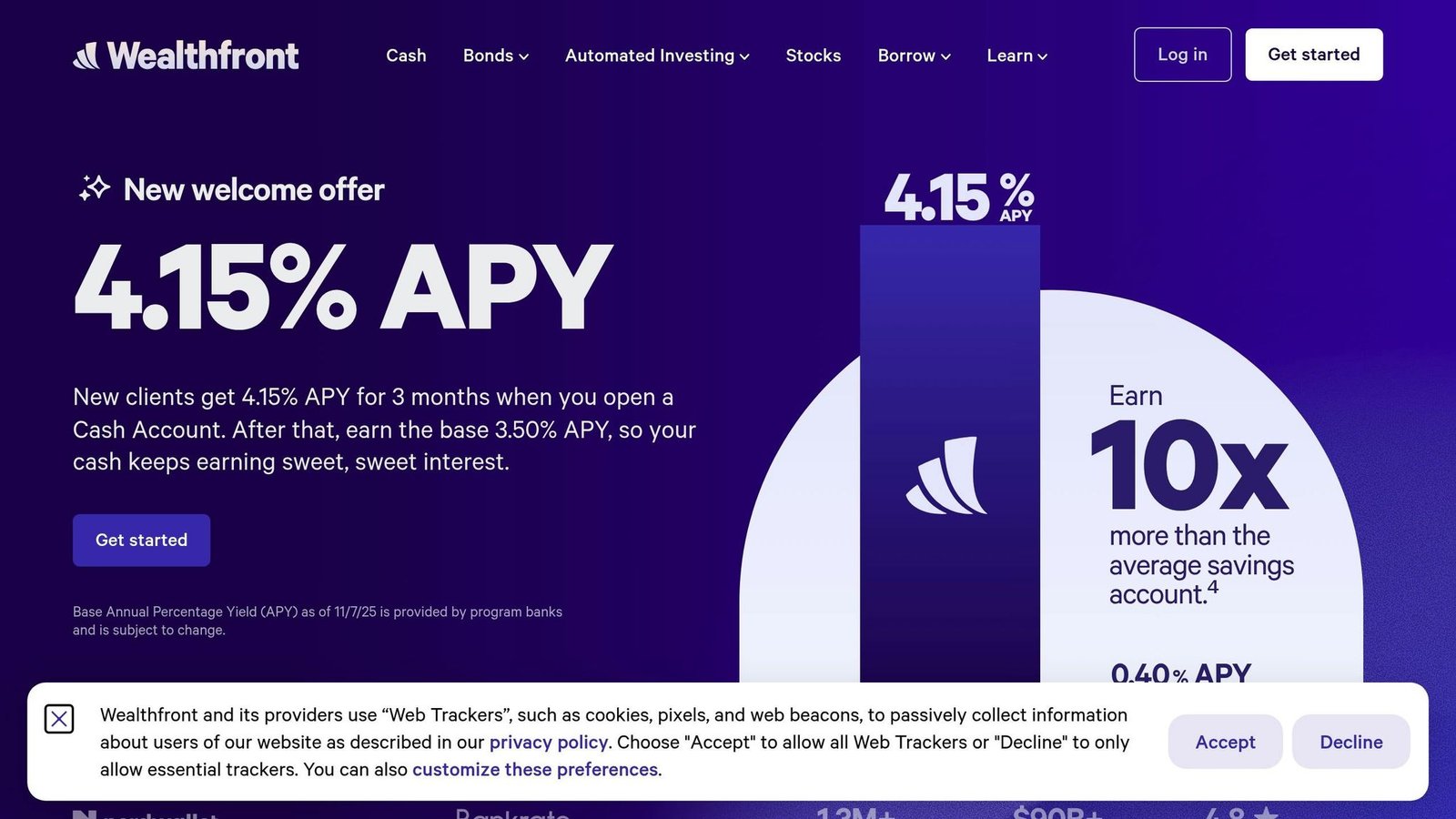
Wealthfront offers a fully digital investment management platform designed with retirement income planning in mind. By combining advanced features with low fees, it appeals to tech-savvy retirees looking for a streamlined, cost-effective way to manage their investments.
Low Fees and Transparent Pricing
Wealthfront keeps things simple with its pricing. It charges a flat 0.25% annual fee. Wealthfront did not state an account minimum on its pricing page when we checked, so the $500 figure previously printed here has been removed; ask Wealthfront before assuming a threshold.
The expense ratios for the ETFs it uses typically fall between 0.06% and 0.13%, keeping overall costs low. For retirees on fixed incomes, minimizing fees like this can make a big difference in preserving wealth over time compared to pricier alternatives.
Portfolio Customization and Risk Management
One of Wealthfront’s strengths is its ability to offer sophisticated portfolio management features that are often reserved for wealthier investors. For instance, the platform includes automated rebalancing, which ensures portfolios stay in line with a retiree’s risk preferences as market conditions shift – all without requiring manual adjustments.
For accounts exceeding $100,000, Wealthfront provides direct indexing to help reduce taxes and improve after-tax returns. Additionally, tax-loss harvesting is available across all accounts, which is a valuable tool for retirees juggling taxable and retirement accounts.
Retirees can also tailor their portfolios by choosing from a variety of asset classes, such as U.S. and international stocks, bonds, real estate, and natural resources. A standout feature for income-focused retirees is Wealthfront’s automated bond ladder, which creates a series of staggered bond maturities. This approach generates predictable income while helping to mitigate interest rate risks.
Retirement Income Planning Tools
Wealthfront goes beyond investment management with its Path tool, a comprehensive resource for retirement planning. This tool can model Social Security strategies, calculate required minimum distributions, and help retirees optimize their income streams to avoid penalties.
The platform also includes goal-based investing tools that allow retirees to set and track income goals, explore different withdrawal scenarios, and project how long their savings might last based on spending habits and market trends. These features are especially useful for retirees who want to test out various “what-if” scenarios without needing to consult a human advisor.
Wealthfront supports multiple IRA types, including Traditional, Roth, SEP, and rollover IRAs, making it easier for retirees to consolidate and manage their accounts in one place. Additionally, its no-fee, FDIC-insured cash management account offers a competitive interest rate, providing flexibility for retirees who need to balance investments with cash reserves.
Retirees should be aware that Wealthfront operates entirely as a digital platform, with no access to human financial advisors. While this approach helps keep costs low, it may not be ideal for those who prefer personalized guidance for complex retirement planning.
Wealthfront suits a retiree who is comfortable managing money on screen and does not want to talk to anyone.
5. Fidelity Go
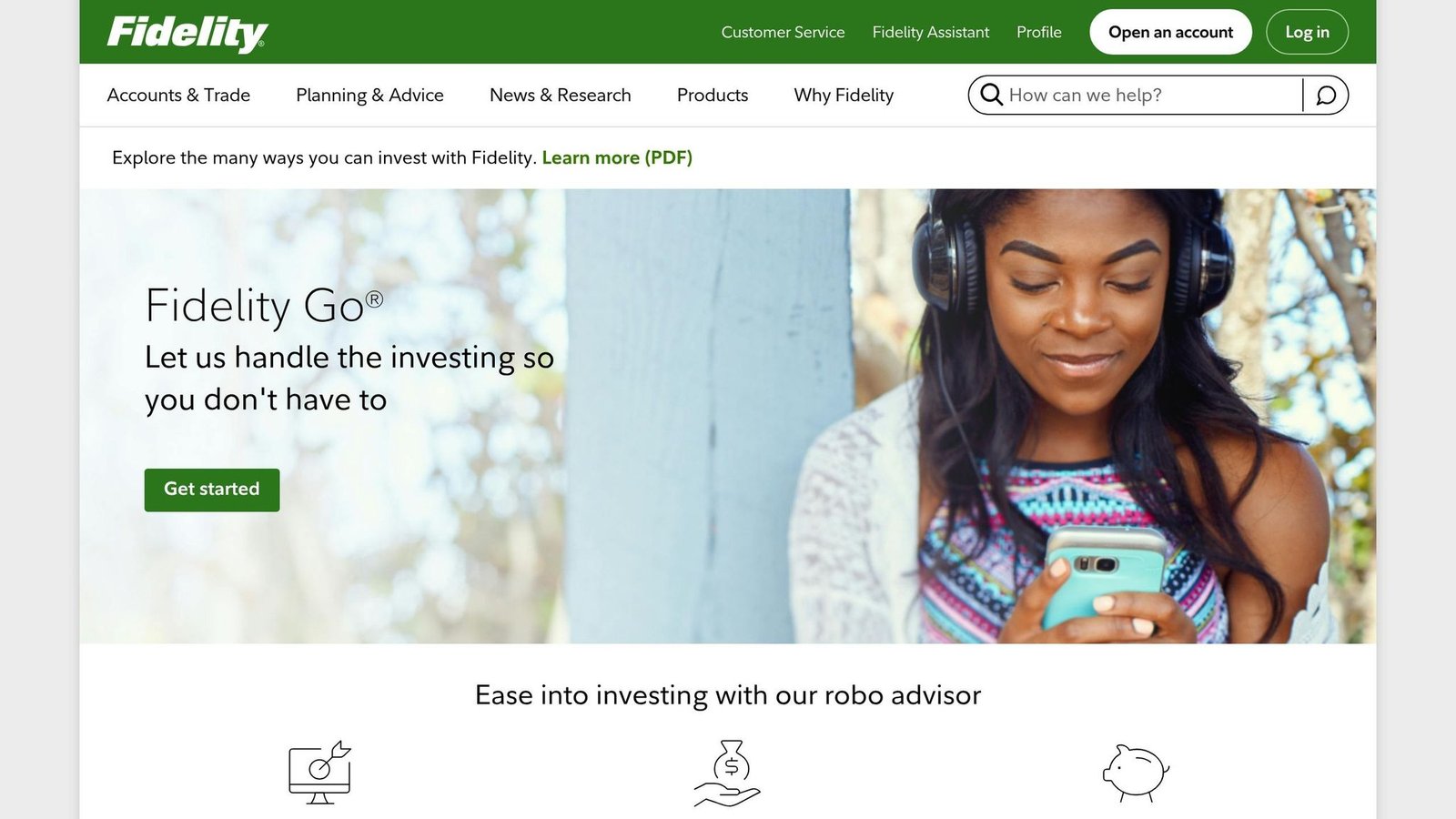
Fidelity Go is a standout choice for retirees who are either starting their journey with automated investing or managing smaller retirement portfolios. Developed by Fidelity Investments – a trusted name in finance – the platform prioritizes simplicity and affordability while delivering professional portfolio management. Its fee structure is particularly appealing for those with modest portfolios.
Low Fees and Straightforward Pricing
Fidelity Go charges no advisory fee below $25,000. At $25,000 and above it charges 0.35% a year on the entire balance, not just the amount over the threshold. That distinction was stated incorrectly in an earlier version of this article and it matters: crossing $25,000 takes you from $0 a year to $87.50, immediately. There is no minimum to open an account, though Fidelity only starts investing once the balance reaches $10.
Tailored Portfolios and Risk Management
Fidelity Go uses a straightforward risk-tolerance questionnaire to design portfolios that align with your financial goals and comfort level with risk. The platform takes care of the heavy lifting by automatically rebalancing portfolios and offering tax-loss harvesting to improve after-tax returns. Backed by Fidelity’s expertise and infrastructure, these features create a professional yet hands-off investment experience. This approach underscores the platform’s user-friendly philosophy.
Customer Support and Advisor Access
While Fidelity Go is primarily a digital platform, it doesn’t leave users without support. Although direct access to human financial advisors isn’t included in the core service, Fidelity’s customer support team is available to assist with account-related questions and basic investment guidance. For retirees seeking more detailed retirement planning, Fidelity’s broader advisory services may be worth exploring.
The platform’s design is deliberately plain, which suits the job. For existing Fidelity customers, the unified dashboard shows all their accounts in one place.
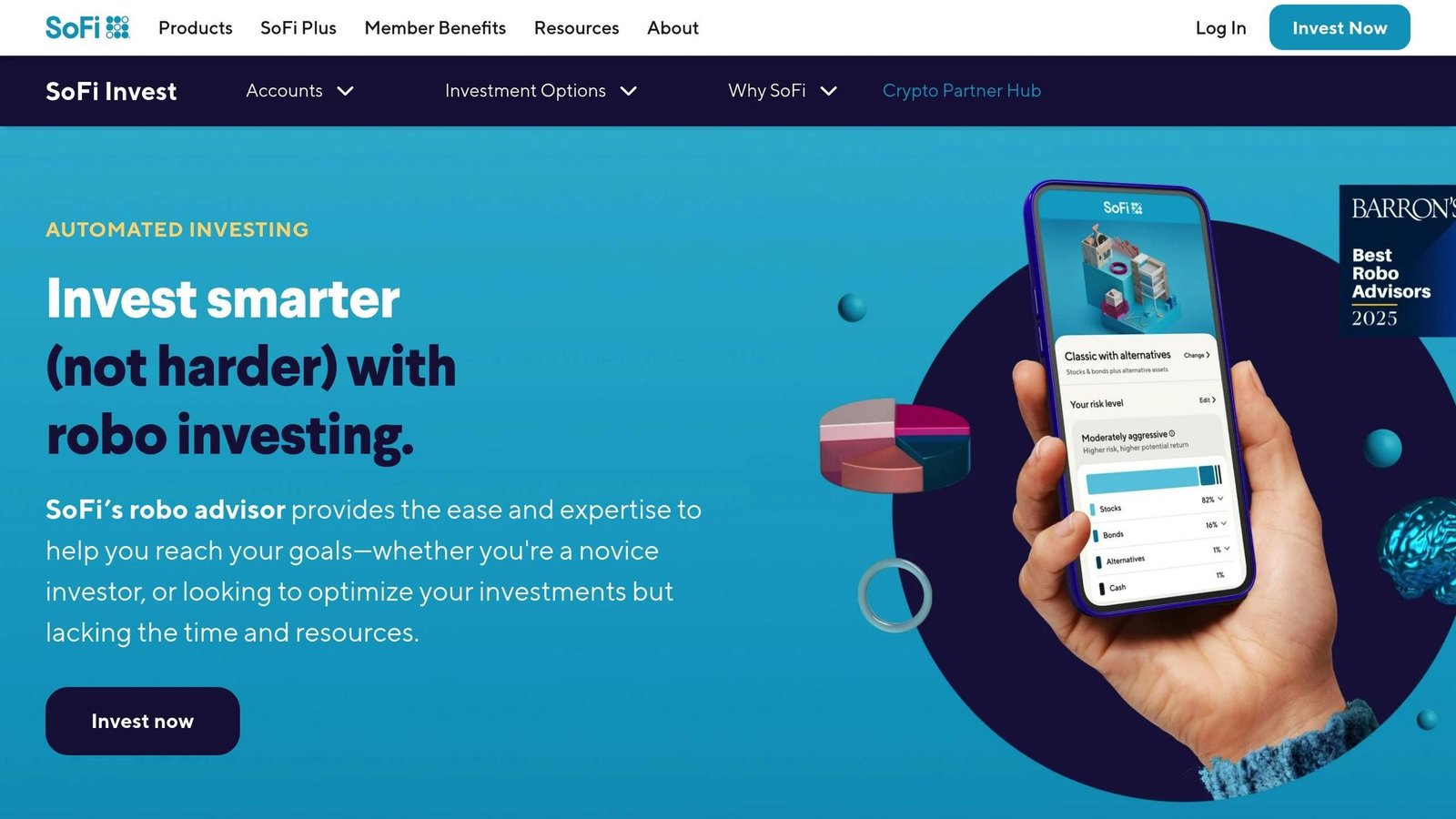
SoFi Automated Investing is a straightforward way to manage investments, pairing automated portfolio management with access to a credentialed financial planner as a member benefit. Note that it is no longer free: SoFi charges 0.25%, and the “no management fees” and “$1 minimum” claims this article used to carry have been corrected below.
Low Fees and Clear Pricing
SoFi automated investing is no longer free. SoFi now charges a 0.25% wrap fee based on account value, on top of the expense ratios of the ETFs in the portfolio. This article previously described it as having zero management fees in two places and 0.25% in a third; 0.25% is the figure on SoFi’s own page, and the claim that it is free has been removed. At 0.25% SoFi is priced in line with Betterment and Wealthfront rather than undercutting them.
Access to Financial Advisors
SoFi offers access to a credentialed financial planner as a member benefit. This service can be especially valuable for retirees, offering guidance on important financial decisions like portfolio allocation, withdrawal strategies, and managing accounts in a tax-efficient way.
Tailored Portfolios and Risk Management
SoFi offers pre-designed portfolios that cater to a wide range of risk preferences, from conservative to aggressive, making it easy to align investments with retirement goals. The platform also automatically rebalances these portfolios, ensuring retirees maintain their preferred risk levels as they move through different stages of retirement.
Tools for Retirement Income Planning
Beyond low fees and expert advice, SoFi also provides tools to make retirement planning easier. These tools help retirees set clear goals, track progress, and estimate future account balances based on various savings and withdrawal scenarios. With its intuitive mobile app, users can keep an eye on their investments and make adjustments as needed.
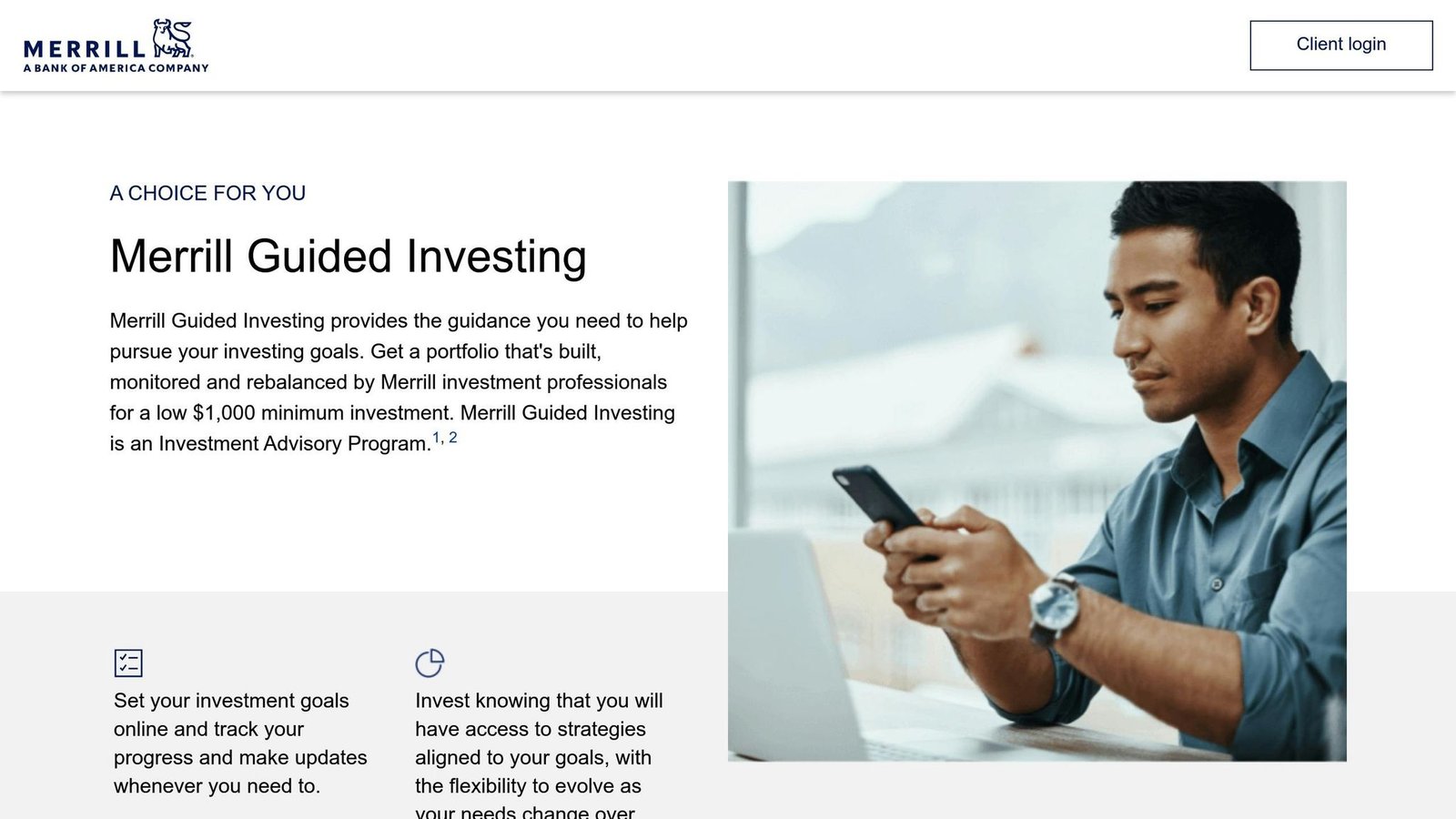
Merrill Guided Investing offers a thoughtful mix of digital tools and human expertise, designed to support retirees in managing their retirement income with confidence. Backed by Bank of America, this platform is ideal for those who appreciate the convenience of automated investing but also want access to personalized guidance when needed.
Access to Human Advisors
Merrill Guided Investing stands out by combining automated investing with the option for personalized advisor support. Retirees can choose between the standard digital platform for automated investing or the Merrill Guided Investing with an Advisor option, which includes one-on-one access to licensed financial advisors for tailored advice.
Retirees can schedule phone or video consultations to discuss portfolio strategies or income planning. A statistic about the age profile of Merrill Guided Investing clients previously appeared here; it was not attributed to any source and has been removed.
Retirement Income Planning Tools
The platform offers a range of tools specifically designed for retirees. These features help users estimate future income needs, explore withdrawal strategies, and model how long their savings might last under different scenarios.
Merrill Guided Investing also simplifies the process of managing required minimum distributions (RMDs) by sending automated reminders and offering guidance to help retirees avoid IRS penalties. Additionally, the platform incorporates tax-efficient strategies, such as tax-loss harvesting and optimized asset location, to reduce the tax burden on withdrawals and portfolio adjustments.
Low Fees and Transparent Pricing
Merrill charges a flat 0.45% a year for Merrill Guided Investing online, assessed monthly on the prior month’s balance. There are no balance tiers. Adding an advisor – Merrill Guided Investing with an Advisor – takes it to 0.85% a year. Bank of America Preferred Rewards members get 0.10% to 0.15% off those rates depending on tier. A tiered “0.45% up to $250,000 and 0.30% over $1 million” structure previously described here does not exist and has been removed.
Minimums depend on the strategy, not the product: $1,000 for growth-focused strategies online, $50,000 for income-focused strategies, and $20,000 for the advisor version of a growth strategy. The $5,000 minimum this article used to quote was wrong in both directions – too high for a growth account, far too low for an income account, which is the one most retirees actually want.
Portfolio Customization and Risk Management
Merrill Guided Investing tailors portfolios to align with each retiree’s risk tolerance, time horizon, and income goals. A detailed risk assessment questionnaire helps ensure that portfolios are well-suited to individual needs. These portfolios are diversified across asset classes and automatically rebalanced as needed to maintain the desired risk level.
Clients can adjust their risk preferences and investment objectives at any time. Plus, the integration with Bank of America’s financial ecosystem makes it easy to manage investments, banking, and retirement accounts all in one place. That single view is the main appeal for retirees looking to simplify their financial management.
Side-by-Side Comparison
Here’s a quick look at how popular robo-advisors stack up against each other:
| Robo-Advisor | Minimum Investment | Annual Fee | Retirement Income Tools | Access to Human Advisors | Account Types | Main Features |
|---|---|---|---|---|---|---|
| Betterment | $0 | 0.25% | Yes | Yes (Premium plan) | Traditional/Roth IRA, 401(k) rollover, taxable | Tax-loss harvesting, withdrawal planning, glide path portfolios |
| Vanguard Digital Advisor | $100 | 0.20% gross (index) | Yes | No | Traditional/Roth IRA, taxable | Life-Cycle Investing Model, low-cost ETF portfolios, automatic rebalancing |
| Schwab Intelligent Portfolios | $5,000 | 0% advisory fee | Yes | No (Premium discontinued) | Traditional/Roth IRA, 401(k) rollover, taxable | No advisory fee, required cash allocation, detailed risk assessment |
| Wealthfront | Not published | 0.25% | Yes | No | Traditional/Roth IRA, SEP IRA, taxable, trust accounts | Direct indexing, automated bond ladders, tax-loss harvesting |
| Fidelity Go | $0 to open | 0% under $25,000, then 0.35% on the full balance | Yes | No (customer support only) | Traditional/Roth IRA, taxable | Free for smaller accounts, Fidelity platform integration |
| SoFi Automated Investing | Not published | 0.25% | Yes | Yes | Traditional/Roth IRA, taxable | Career coaching, member benefits, financial advisor access |
| Merrill Guided Investing | $1,000 growth / $50,000 income | 0.45% online, 0.85% with an advisor | Yes | Yes | Traditional/Roth IRA, taxable | Bank of America integration, RMD management, tax-efficient strategies |
Key Details to Consider
- Minimum Investments: Betterment and Fidelity Go have effectively no barrier to entry. Schwab requires $5,000. Merrill depends on the strategy: $1,000 for growth, $50,000 for income.
- Annual Fees: Schwab charges no advisory fee, funding the service through a required cash allocation instead. Fidelity Go is free below $25,000 and 0.35% on the whole balance above it. Betterment, Wealthfront and SoFi all sit at 0.25%. Merrill is 0.45% online and 0.85% with an advisor.
- Retirement Income Tools: All platforms provide tools like withdrawal calculators and automatic rebalancing. Betterment stands out with glide path portfolios, Vanguard uses its Life-Cycle Investing Model, and Wealthfront offers automated bond ladders to support income generation.
- Access to Human Advisors: This varies widely. Betterment Premium includes unlimited advisor access at 0.65%. Merrill includes advisor access in its 0.85% tier. SoFi offers planner access as a member benefit. Schwab no longer offers a hybrid tier at all.
- Account Types: All platforms support Traditional and Roth IRAs, with Wealthfront offering additional options like SEP IRAs and trust accounts for those with more complex needs.
- Unique Features: Tax-loss harvesting is a common perk, but platforms like Wealthfront and Merrill offer standout features. Wealthfront’s direct indexing and Merrill’s integration with Bank of America are worth noting. SoFi bundles member benefits including career coaching.
This comparison highlights the strengths of each platform, helping you narrow down the best fit for your retirement goals. Whether you’re looking for low fees, personalized advice, or specialized tools, there’s likely a robo-advisor that matches your needs.
How to Pick the Right Robo-Advisor for Your Retirement
Choosing the right robo-advisor for your retirement isn’t just about finding the lowest fees. It’s about finding a platform that fits your financial goals, comfort with risk, and retirement timeline. Let’s break down the key factors to consider.
Take a close look at the risk questionnaire results. As you near retirement, protecting your savings often becomes more important than chasing high returns. For instance, Schwab Intelligent Portfolios offers 12 risk profiles. Note that every one of them carries a mandatory cash allocation, which drags on returns in a way a percentage fee does not show.
Next, think about how your income needs will influence your strategy. Robo-advisors with strong income planning tools – like automated bond ladders or withdrawal calculators – can help ensure steady cash flow. Wealthfront, for example, offers automated bond ladders for predictable income, while Betterment’s glide path portfolios gradually shift to more conservative investments as you approach retirement.
Accessible customer support is another must. While robo-advisors are built for self-service, retirement planning can get tricky. Fidelity Go offers customer support but not advice. If you think you’ll need personalized advice, look for options that include access to certified financial planners – currently Betterment Premium, Merrill with an Advisor, or SoFi. Schwab is no longer one of them.
Account minimums and fees matter, especially on a fixed income. Instead of focusing only on the cheapest option, think about what you’re getting for the price. A slightly higher fee might be worth it if it includes advanced tools or access to human advisors, which can be crucial for managing your retirement effectively.
Integration with your overall financial picture is another consideration. Some robo-advisors let you sync external accounts, offering a complete view of your finances. This feature is particularly helpful when juggling Social Security, pensions, and other income sources during retirement.
Beyond risk and fees, look at the specific retirement tools offered by each platform. Vanguard Digital Advisor, for example, includes calculators for estimating retirement income and medical costs, while Wealthfront allows you to borrow against your portfolio at competitive rates, adding flexibility to your cash flow management.
Know when to seek expert advice. Robo-advisors are great for routine portfolio management, but for complex issues – like estate planning or major tax strategies – you might need help from a certified financial planner.
Don’t overlook the user experience. Since you’ll likely check your accounts often, pick a platform with an easy-to-navigate interface. All of these platforms have usable mobile apps; try each one before committing rather than relying on a store rating.
Finally, start by identifying your top retirement concern. If steady income is your main goal, prioritize platforms with strong income tools. If fees are your biggest worry, explore low-cost options like Schwab’s fee-free digital service. And if having access to human advisors is important, make sure that feature is part of your choice.
Conclusion
The seven platforms we’ve explored – Betterment, Vanguard Digital Advisor, Schwab Intelligent Portfolios, Wealthfront, Fidelity Go, SoFi Automated Investing, and Merrill Guided Investing – each bring something distinct to the table for retirees looking for automated investment management.
For smaller portfolios under $25,000, Fidelity Go stands out with free management for accounts below this threshold. If you’re focused on keeping fees as low as possible, Vanguard Digital Advisor quotes a 0.20% gross fee on its index portfolio, reduced by revenue credits, with a $100 minimum. Retirees who want a human to talk to should look at Betterment Premium or Merrill Guided Investing with an Advisor, and price the difference: advice is the expensive part of every one of these products.
When choosing a platform, remember that the goal isn’t just to pick the cheapest option – it’s to find one that aligns with your retirement timeline, risk tolerance, and income needs. Most of these platforms provide drawdown calculators and income planning tools; the depth varies more than the marketing suggests.
Take advantage of trial periods or free consultations to explore the platforms that interest you. This hands-on research can help you assess their interfaces and retirement planning tools before committing. For instance, understanding how fees add up – like $250 annually on a $100,000 portfolio with a 0.25% fee versus $350 with a 0.35% fee – can make a big difference in your long-term financial planning.
As retirement planning becomes more technology-driven, it’s also worth considering how to manage multiple financial tools, accounts, and strategies effectively. Staying organized and maintaining visibility across different investments can make a significant difference in long-term outcomes. If you’re looking to improve coordination and tracking, you can explore the best tools for managing multiple projects, which can also be applied to managing complex financial plans.
Finally, keep in mind that your robo-advisor will be managing your funds for years, possibly decades. It’s crucial to choose a platform that won’t chip away at your fixed income with excessive fees. Start by identifying what matters most to you – whether it’s minimizing costs, accessing human advisors, or detailed retirement planning features – and use that as your guide to narrow down the options.
FAQs
What should retirees look for when selecting a robo-advisor for their retirement investments?
When selecting a robo-advisor for retirement investments, there are a few critical factors retirees should keep in mind to ensure their financial goals are met. One of the most important considerations is low fees. High costs can chip away at your savings over time, so it’s smart to choose platforms with clear, upfront pricing and no hidden charges.
It’s also worth looking for robo-advisors that provide retirement-focused tools. Features like income planning, Social Security optimization, and tax-efficient withdrawal strategies can make a big difference in managing your retirement funds effectively. On top of that, the platform should be easy to navigate and offer reliable customer support to assist you when needed.
Finally, take a close look at the robo-advisor’s investment approach. Does it match your risk tolerance and long-term goals? For retirees, platforms that emphasize conservative and diversified portfolios are often a safer choice, offering more stability during this stage of life.
What impact do fees and minimum investment requirements have on retirement savings when using these robo-advisors?
Fees and minimum investment requirements play a big role in shaping your long-term retirement savings. Lower fees mean you get to keep more of your investment returns, which can make a huge difference over time – especially for retirees who depend on consistent growth. On the other hand, robo-advisors with little to no minimum investment requirements remove barriers, allowing you to start investing no matter how much you’ve saved up.
When picking a robo-advisor, think about how these costs fit into your financial plans. Even seemingly small fee differences can snowball over the years, potentially impacting the total value of your retirement savings.
Why is it important for retirees to have access to human financial advisors, and which robo-advisors provide this feature?
Access to human financial advisors can make a big difference for retirees navigating the often complicated world of financial planning. From managing retirement income and fine-tuning tax strategies to preparing for healthcare costs, retirees face decisions that benefit from expert advice. Having a trusted professional to turn to not only offers personalized guidance but also brings reassurance, especially when markets are unpredictable.
These days, many robo-advisors have introduced hybrid models that blend automated investment management with access to human advisors. Some of the most popular platforms include features designed specifically for retirees, such as affordable retirement planning tools and easy-to-use interfaces. Take the time to explore options that match your unique needs to help ensure a more stable and confident financial future.
More on this topic
Browse all 53 articles on Finance & Accounting, or jump straight to our buying guide: Best Accounting Software for Small Businesses.