Employee Net Promoter Score (eNPS) helps small businesses measure team satisfaction and engagement with a simple, cost-effective approach. It categorizes employees into Promoters (loyal advocates), Passives (neutral), and Detractors (unhappy team members). Calculating eNPS is straightforward: subtract the percentage of Detractors from Promoters to get a score between -100 and +100. A score over 10 is positive, while 50+ is exceptional.
For small businesses, eNPS tools offer affordable, easy-to-use solutions that save time and resources. The best tools are budget-friendly, quick to set up, and scalable for growing teams. Some top options include:
- Matter: Free plan with Slack/Teams integration and channel-specific billing.
- Workleap (Officevibe): Focuses on anonymous feedback and actionable insights at $5/user/month.
- SurveyMonkey: Versatile survey builder with free and paid plans starting at $25/user/month.
- TINYpulse: Short pulse surveys combined with peer recognition for engagement tracking.
- Peoplegeist: Customizable pulse surveys with detailed team insights.
Each tool simplifies feedback collection, integrates with existing workflows, and supports growing teams. Choose one based on your team's size, budget, and communication style.
Quick Comparison
| Tool | Starting Price | Minimum Users | Key Feature |
|---|---|---|---|
| Matter | Free; Paid at $5/user | 1 | Slack/Teams integration, channel billing |
| Workleap | $5/user/month | 10 | Anonymous feedback, insights |
| SurveyMonkey | Free; $25/user/month | 1 | Extensive templates, general surveys |
| TINYpulse | Custom pricing | Varies | Peer recognition + pulse surveys |
| Peoplegeist | Custom pricing | Varies | Team segmentation, insights |
Start with free trials to find the right fit for your team’s needs.
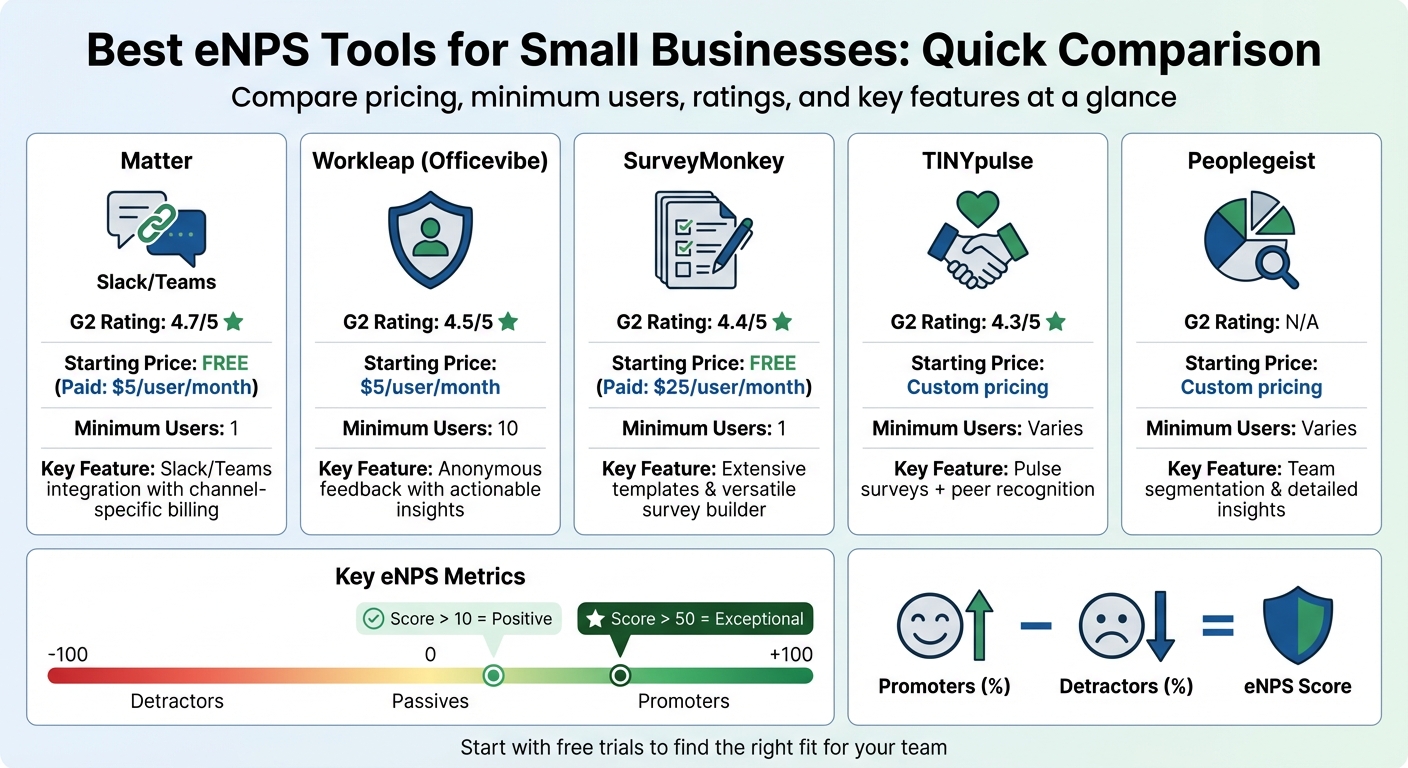
eNPS Tools Comparison: Pricing, Features, and Ratings for Small Businesses
How to Calculate eNPS (Free HR Tools Inside)
sbb-itb-d1a6c90
What to Look for in eNPS Tools
Finding the right eNPS tool involves weighing affordability, ease of use, and the ability to handle data effectively. For small businesses, especially those with limited HR resources, it's essential to focus on tools that are cost-efficient, simple to implement, and capable of growing alongside your team.
Budget-Friendly Pricing
Cost matters, and the best eNPS tools offer flexible pricing options. Some platforms, like NPSpack, provide lifetime access for as little as $29–$39, eliminating the hassle of recurring fees. Free options are also worth exploring. For instance, Zonka Feedback lets you collect unlimited website feedback at no cost, and Wellbee offers a Slack-integrated platform for free. If you prefer to test tools before committing, look for platforms like Simplesat, which offer 14-day trials without requiring a credit card.
It's also smart to choose tools that allow unlimited survey responses on free plans - like Zonka Feedback's website feedback channel - to avoid extra charges as your participation grows. And don’t overlook native integrations; they can save you money by reducing the need for additional software licenses and training. Beyond pricing, ensure the tool is easy to launch and seamlessly integrates with your workflows.
Simple Setup and Use
An effective eNPS tool should let you launch surveys quickly. For example, FeedbackPulse boasts a setup time of under two minutes, while Wellbee users report being able to run their first survey in under 10 minutes. Pre-built templates and question libraries - sometimes offering more than 50 templates and 150 sample questions - can make deployment even faster. Automated scheduling features, complete with recurring survey cycles and reminders, ensure consistent feedback collection without adding to your workload.
"Before vs after: we now run one automatic survey every three weeks – no risk of forgetting or leaving the activity for the end of the year review. Seamless way to collect feedback from all employees in 2-3 days!" - Valentina Triacca, Co-founder & COO of Lymphatica Medtech
Ease of use is just the beginning; scalability is also key as your business expands.
Growth Capacity and Data Analysis
As your company grows, your eNPS tool should grow with it. Look for tools that can handle teams ranging from just a few employees to over 200. Features like HRIS integrations, API access, and bulk CSV uploads can make managing larger employee lists much easier. Additionally, tools that offer segmentation by department, location, or tenure allow you to pinpoint specific areas of concern.
Advanced analytics, such as AI-powered insights, can transform open-ended feedback into actionable recommendations. This level of analysis is crucial for identifying trends and addressing issues before they escalate. Regular pulse surveys - conducted every three weeks or monthly - can help you stay ahead of potential challenges, especially when only 31% of U.S. employees report being actively engaged at work.
"Before FeedbackPulse we lacked a consistent and simple way to measure team sentiment. Now we run eNPS monthly and actually have data to work with that's easy to digest and straightforward to obtain with minimal effort." - Edward Feng, Chief of Staff at InvestorHub
Best eNPS Tools for Small Businesses
Here’s a look at some top eNPS tools that are budget-friendly, easy to use, and adaptable to small business needs. Each tool is tailored to help you gather feedback effectively, no matter your team size or workflow.
Matter
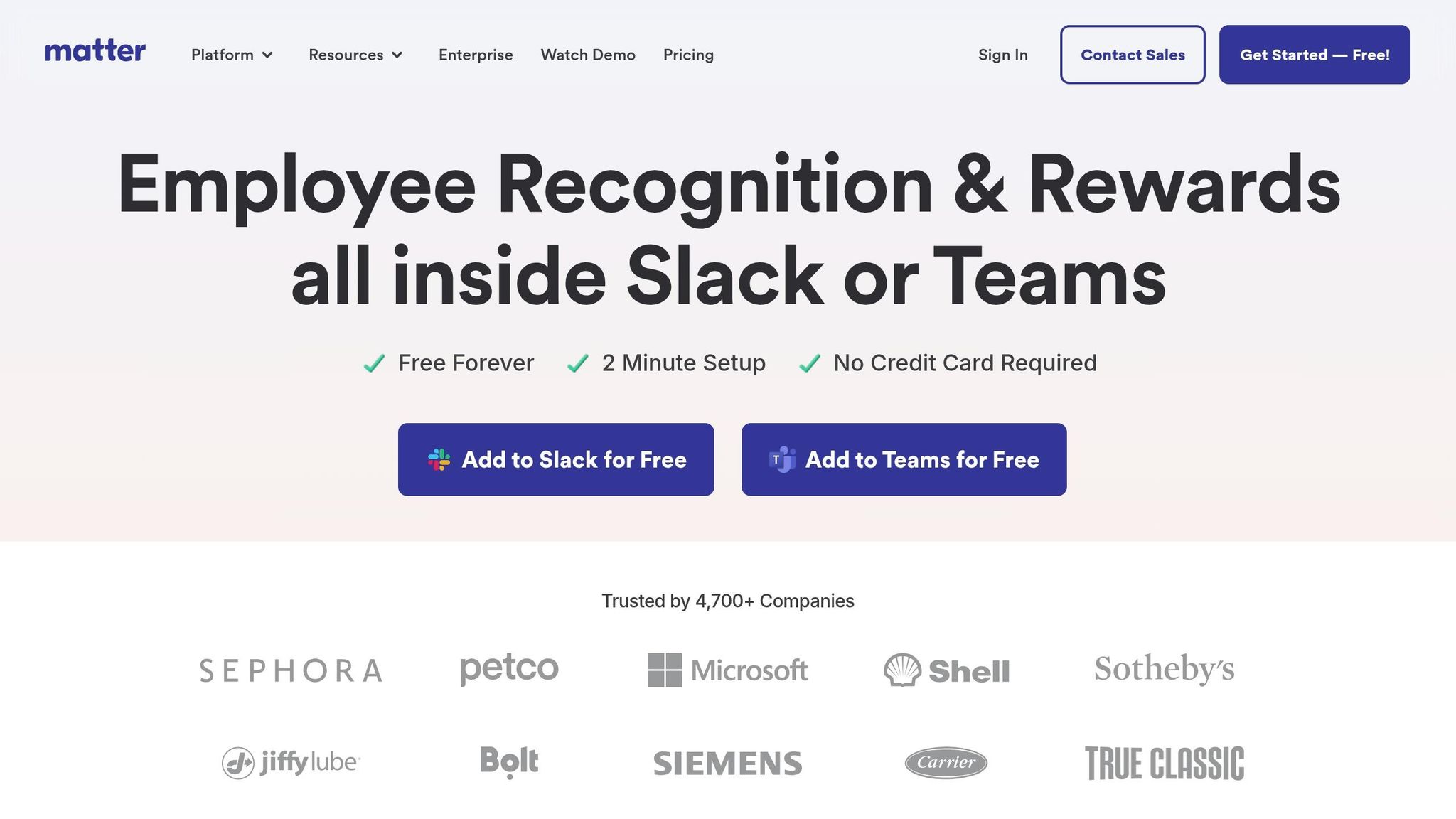
Matter integrates seamlessly with Slack and Microsoft Teams, allowing employees to share feedback directly within their daily workspace. Its setup is quick - just two minutes - and doesn’t require any technical expertise, making it a great option for small businesses without IT support. The platform offers a Free Forever plan at $0, with paid plans starting at $1/user/month (billed annually). For those needing survey capabilities, there’s an add-on for $2/user/month, keeping costs manageable at under $5 per employee.
Matter’s standout feature is its channel-specific billing model. You only pay for users in designated Slack or Microsoft Teams channels, not your entire workspace. This approach can significantly lower costs for businesses with multiple teams. Additionally, the platform claims its integrated surveys can increase response rates by up to 10 times compared to traditional email surveys.
"Matter has motivated people to participate like no other software we have ever used." - Jeff Hagel, President, McInnis & Holloway
In late 2025, Jeff Hagel shared how morale at McInnis & Holloway improved dramatically. Within just two months, employees sent over 2,000 kudos, and engagement rates soared past 80% [19, 20].
Workleap (Officevibe)
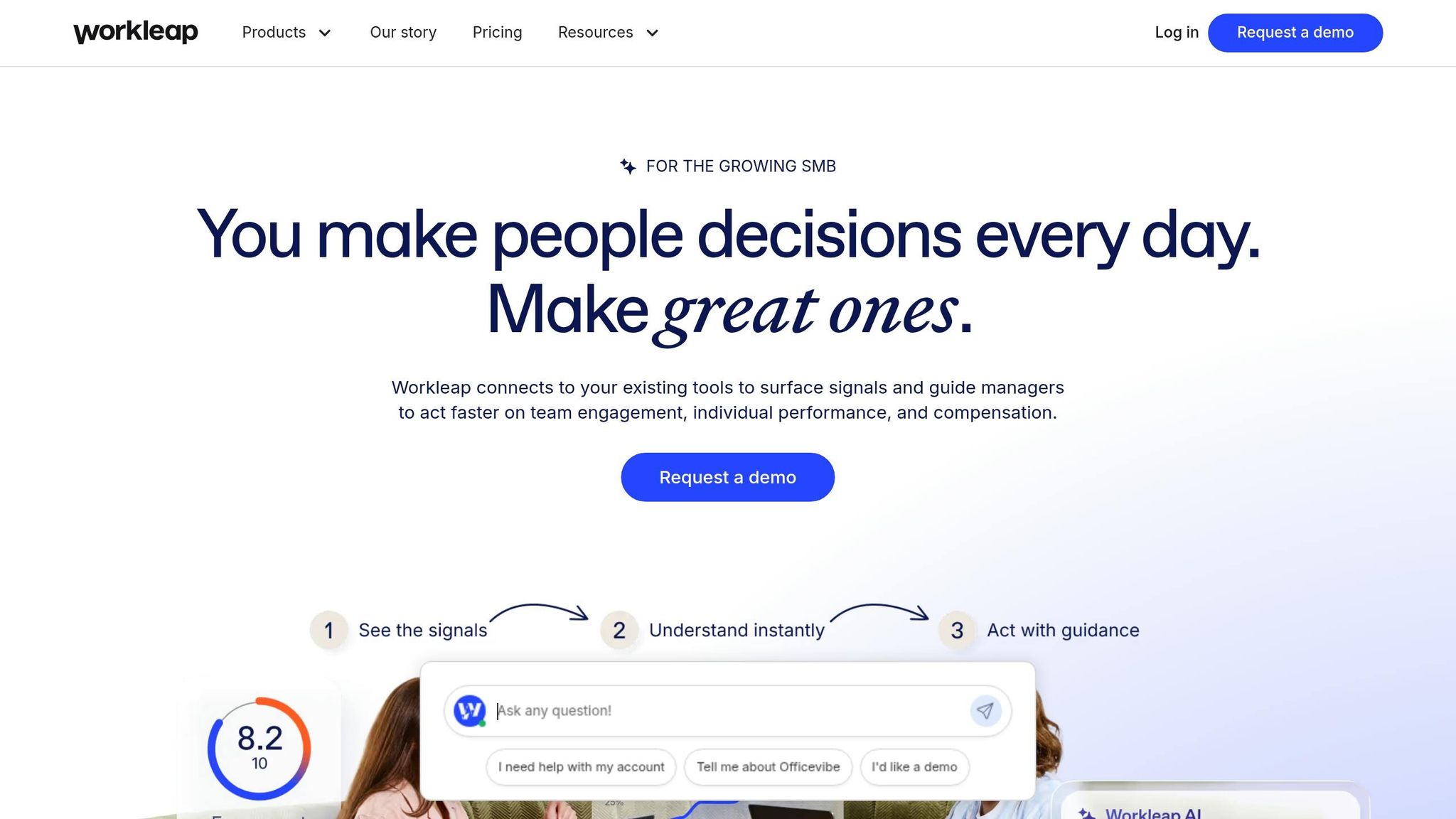
Workleap focuses on pulse surveys and anonymous feedback, offering a user-friendly experience with insight-driven tools. Pricing starts at $5/user/month, and the platform is ideal for businesses that have outgrown the startup phase, as it typically requires a minimum of 10 users. Its clean interface ensures that teams can start using it right away without a steep learning curve.
Workleap has a 4.5/5 rating, with users appreciating its simplicity and features that help managers act on anonymous feedback. The platform also connects eNPS scores to actionable insights, guiding managers to enhance workplace culture. This is critical since employees who feel connected to their company culture are 47% less likely to seek other job opportunities.
"I like how easy it is to use from day one. The interface is clean and doesn't take much time to learn." - Hardik C., User Review, Workleap Officevibe
SurveyMonkey
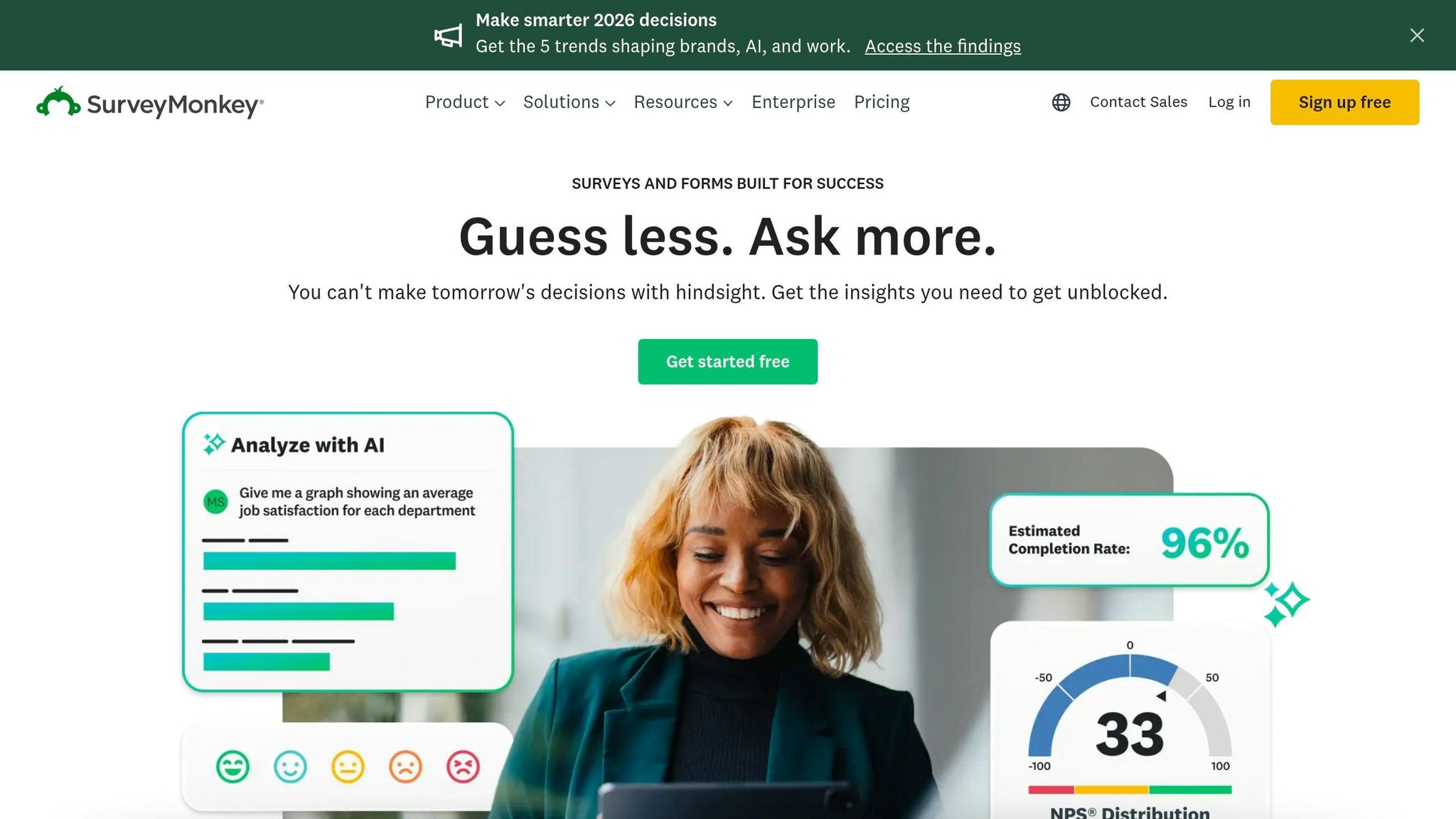
SurveyMonkey is a versatile tool offering pre-built templates and basic analytics. Its free plan allows up to 25 responses per survey (with a 10-question limit), while team plans start at $25/user/month. Though it’s on the pricier side for small businesses, its extensive template library and familiar interface can make it worthwhile for teams with diverse survey needs.
You can use SurveyMonkey for a variety of purposes, including customer satisfaction, product feedback, and employee engagement surveys. With 91% of people preferring online surveys, its straightforward analytics make it a practical choice for many small businesses.
TINYpulse
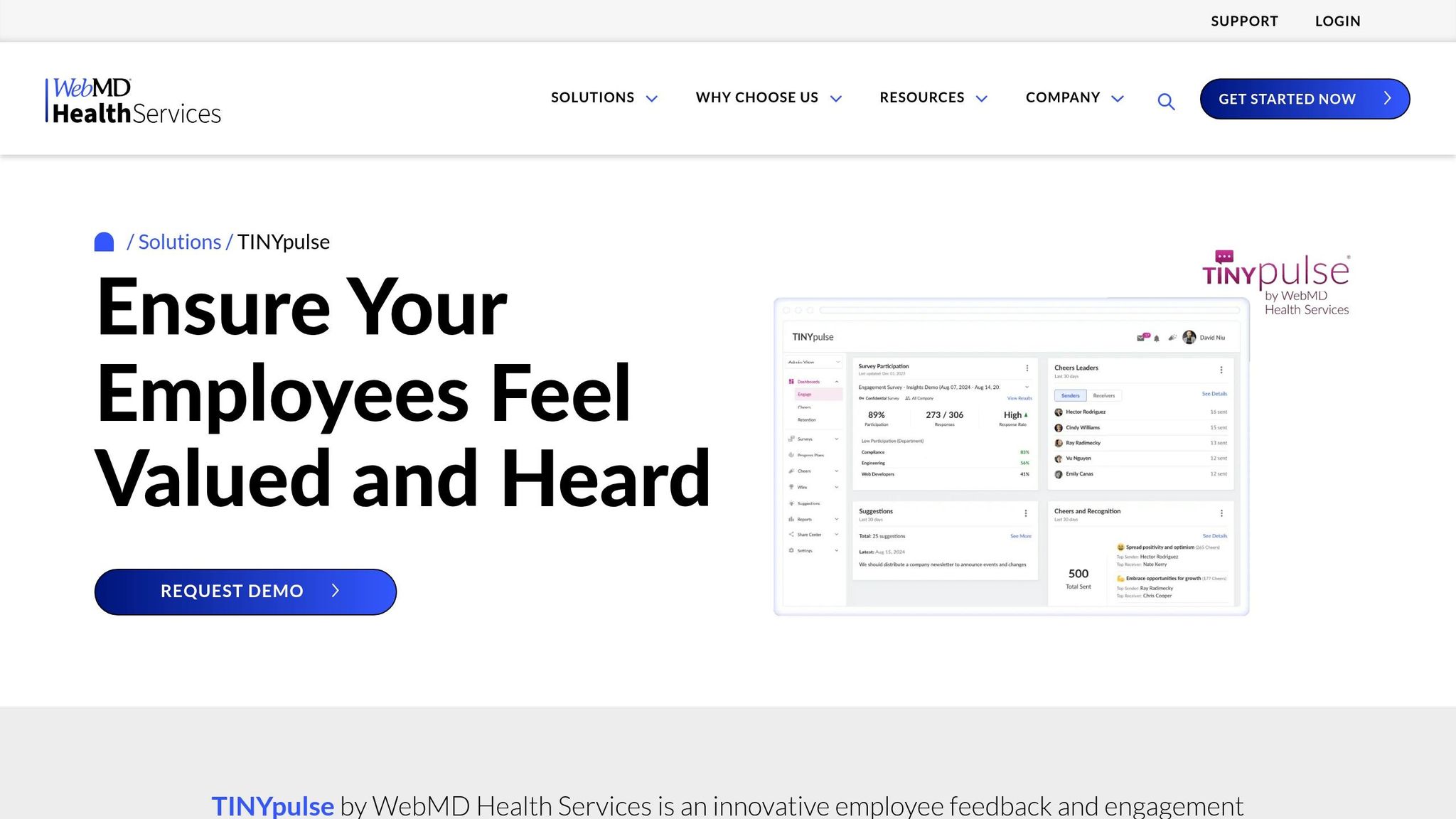
TINYpulse combines lightweight feedback tools with recognition features, creating a loop that encourages continuous engagement and improvement. Instead of relying on long annual surveys, it uses shorter pulse surveys - usually 3 to 15 questions - to reduce fatigue while capturing up-to-date sentiment.
The platform also addresses engagement challenges with its recognition tools. For example, only 31% of U.S. employees report being actively engaged at work. By blending eNPS tracking with peer recognition, TINYpulse helps businesses identify issues and build a more responsive and connected team environment.
Peoplegeist
Peoplegeist is designed for small to medium-sized businesses, offering customizable pulse surveys and detailed team insights. Its segmentation features allow you to analyze results by department, location, or tenure, helping you pinpoint specific areas of concern.
The platform automates regular pulse checks - whether weekly, biweekly, or monthly - ensuring consistent feedback collection. This is especially important for small businesses, where team dynamics can change quickly, and early detection of issues can prevent costly turnover.
Peoplegeist also emphasizes actionable insights over raw data, making it easier for leaders without HR analytics expertise to interpret results and take meaningful steps. By aggregating responses at the team level, it protects individual anonymity while delivering valuable insights, making it a strong choice for growing teams with evolving feedback needs.
eNPS Tools Comparison
Here’s a quick comparison of some popular eNPS tools to help you decide which one aligns best with your budget and team size.
| Tool | Starting Price | Minimum Users | G2 Score | Key Differentiator |
|---|---|---|---|---|
| Matter | $0 (Free Forever); $5/user/month for paid plans | 1 | 4.7/5 | Channel-specific billing; integrates with Slack and Microsoft Teams |
| Workleap (Officevibe) | $5/user/month | 10 | 4.5/5 | Anonymous feedback with actionable insights |
| SurveyMonkey | $0 (Free); $25/user/month for team plans | 1 | 4.4/5 | Extensive template library; versatile survey builder |
| TINYpulse | Custom pricing | Varies | 4.3/5 | Combines pulse surveys with peer recognition |
Matter stands out with its use of a 5-point Likert scale, designed to reduce survey fatigue and encourage higher participation rates. This feature is especially advantageous for small businesses, where every single response can provide critical insights into team sentiment.
SurveyMonkey, on the other hand, shines with its vast template library and branding options. However, it’s not exclusively focused on eNPS automation. This tool is a better fit for businesses looking for a more general-purpose survey builder rather than a dedicated eNPS solution.
Each tool's pricing structure is flexible, making it easier for small businesses to manage costs as their teams grow. This comparison gives you a clearer picture of what each tool offers, setting the stage for selecting the one that aligns with your specific needs.
How to Choose the Right eNPS Tool
Before picking an eNPS tool, start by estimating how many survey responses you'll gather each month. This step helps you sidestep unexpected costs like hard limits or overage fees that could throw off your budget. For instance, a team of 20 employees surveyed monthly could generate around 240 responses a year. If you're eyeing a free plan, make sure it can handle your anticipated volume.
Next, think about how your team communicates. Choose a tool that integrates seamlessly into their daily workflows. Multi-channel options - like Slack, Microsoft Teams, or email - can increase response rates by 30–40%. If your team relies heavily on Slack, a platform like Matter (rated 4.7/5 on G2) makes participation almost effortless.
Look for tools with automation that simplify follow-ups. For example, some platforms automatically notify you when detractors respond or prompt follow-ups with promoters. These features can reduce admin time by up to 70%, which is especially helpful if you don’t have a dedicated HR team. Focus on tools that go beyond generating charts and help you close the feedback loop effectively.
Steer clear of platforms loaded with features you won’t use. Enterprise-level tools charging $15+ per user often include capabilities unnecessary for smaller teams. Instead, explore free tiers offered by trusted providers - many support up to 100 responses, which is plenty for very small teams.
"NPS software transforms guesswork into strategy" - Kate Williams, Content Marketer, SurveySparrow
Lastly, ensure the tool can grow with your business. As your team expands, you’ll want a platform that supports higher headcounts, department-level segmentation, and integrations with systems like your HRIS or CRM. This prevents the hassle and expense of switching tools down the line.
Conclusion
This guide has showcased budget-conscious business applications designed to fit seamlessly into everyday workflows. Options like Matter, Workleap (Officevibe), SurveyMonkey, TINYpulse, and Peoplegeist each bring their own streamlined approach to tracking employee advocacy.
The secret to success lies in selecting a tool that integrates effortlessly into your team’s existing communication channels. Platforms that work with Slack, Microsoft Teams, or email tend to boost engagement by meeting employees where they already are. For smaller businesses without a dedicated HR team, tools with quick setup processes and automation features can reduce administrative burdens by as much as 70%.
To make the most of eNPS data, prioritize tools that help you act on feedback quickly. Look for features like automated alerts for negative responses and real-time dashboards that allow for immediate follow-up. As Dmitry Saprykin from Matter explains:
"Choosing the right eNPS survey software can make the difference between simply collecting feedback and actually creating a positive workplace transformation".
Start with free trials to test compatibility with your team’s communication habits and overall workflow. These trials are a great way for small teams to assess whether a platform aligns with their needs. As your team grows, ensure the platform you choose offers scalable pricing plans and advanced features like department-level segmentation to keep up with your organization’s changing demands.
FAQs
How often should we run eNPS surveys?
eNPS surveys work best when conducted quarterly or biannually. This schedule allows you to track trends over time and see how any workplace changes are influencing employee sentiment. By sticking to regular intervals, you can gather consistent feedback while avoiding survey fatigue among employees.
What’s a good eNPS score for a small business?
A good eNPS score for small businesses usually ranges between 10 and 30. Anything above 30 is often seen as outstanding. However, while these benchmarks can provide guidance, the real focus should be on consistently improving your score over time and taking meaningful action based on employee feedback.
How can we act on detractor feedback without breaking anonymity?
To handle feedback from detractors while ensuring anonymity, consider using tools designed for secure, confidential communication. These platforms allow individuals to voice their concerns without exposing their identities, creating a safe space for honest input. Businesses can then address issues effectively by focusing on general follow-ups or implementing broader initiatives that tackle common concerns - all while safeguarding the privacy of the feedback provider.