Whistleblower reward programs are reshaping how companies handle misconduct. By offering 10% to 30% of monetary sanctions to individuals who report violations, these programs encourage insiders to disclose serious issues. The result? Faster detection, reduced penalties for companies that self-disclose, and billions recovered in fines.
Key takeaways:
- Financial incentives work: In 2025, whistleblowers received over $330 million in rewards, and tips led to $6.8 billion in settlements.
- Internal reporting matters: 80% of whistleblowers initially report issues internally, giving companies a chance to act before regulators do.
- Government programs are growing: The SEC and DOJ have expanded their whistleblower initiatives, with record-breaking tips and awards in recent years.
While whistleblower programs uncover fraud that internal systems miss, companies must improve their own processes. Anonymous reporting channels, clear timelines (like the DOJ’s 120-day rule), and anti-retaliation measures are critical to reducing risks and avoiding costly investigations.
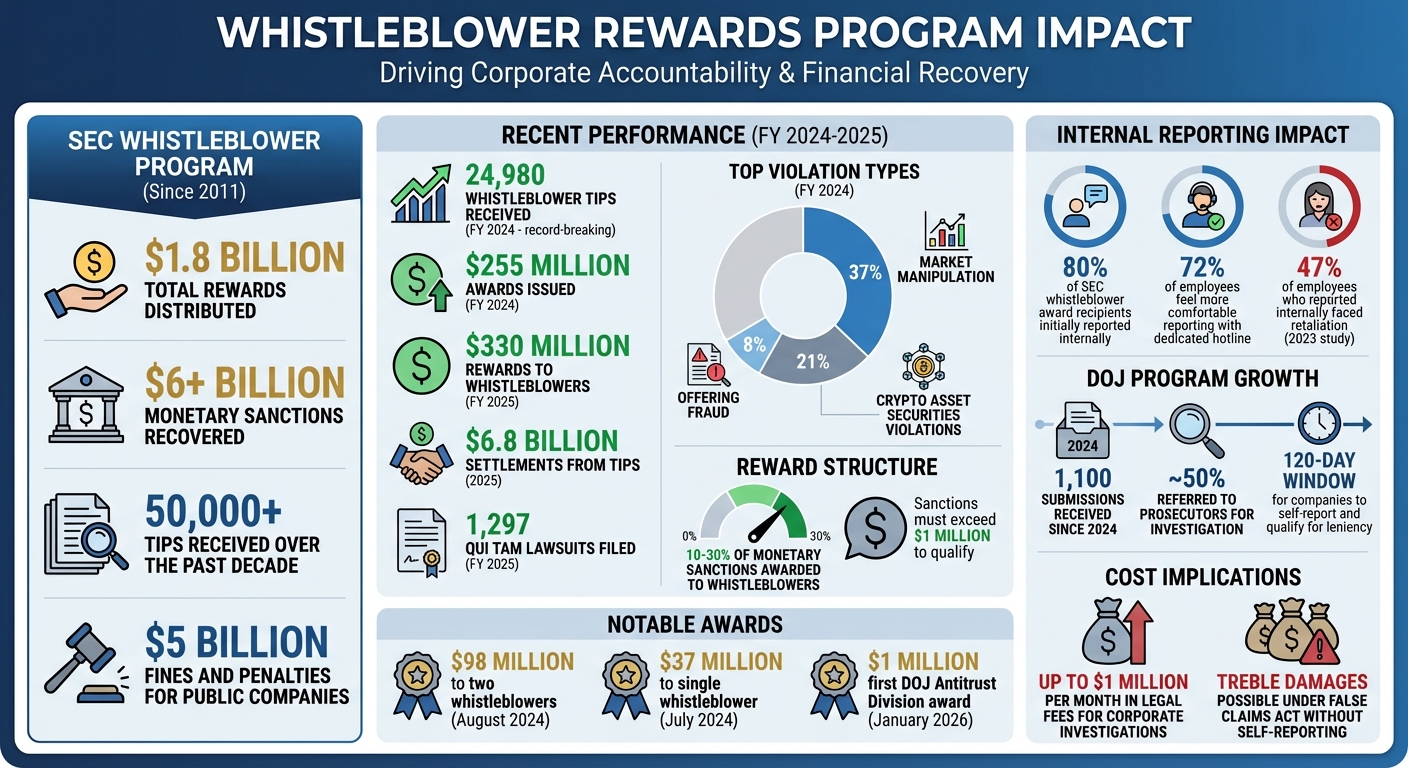
Whistleblower Rewards Impact: Key Statistics and Financial Outcomes 2011-2025
Understanding Whistleblower Rewards
sbb-itb-d1a6c90
Compliance Risks Without Whistleblower Reward Programs
When companies don't implement whistleblower reward programs, they leave a critical gap in their compliance systems, exposing themselves to serious risks. Without financial incentives to offset the personal and professional risks of speaking up, employees are far more likely to bypass internal reporting channels and take their concerns directly to regulators. This shift can escalate what might have been manageable internal issues into costly regulatory actions. The ripple effects include significant financial losses and increased scrutiny from regulators.
The financial consequences can be staggering. In the past decade, tips from whistleblowers to the SEC have resulted in public companies paying nearly $5 billion in fines and penalties. When employees choose external reporting over internal channels, companies lose the chance to self-disclose violations within the critical 120-day window, which could qualify them for a "presumption of declination" (essentially, a decision not to prosecute). External reports also tend to spark broader investigations, driving legal costs as high as $1 million per month. These financial burdens highlight the importance of having effective internal reporting systems.
Weak Internal Reporting Systems
The risks are compounded when a company's internal reporting systems fail to protect employees who come forward. Many employees view these systems as either ineffective or too risky for their careers. Unlike external reporting to the SEC or DOJ, internal channels often lack statutory protections and enforced anonymity, leaving employees vulnerable to retaliation. According to a 2023 study by the Ethics and Compliance Initiative, nearly 47% of employees globally who reported misconduct internally faced some form of retaliation. Without adequate protections and incentives, internal reporting becomes far less appealing.
The problem worsens when internal processes focus more on identifying whistleblowers than on investigating their claims. These so-called "sham investigations" prioritize shielding the company’s reputation rather than addressing wrongdoing. A notable example is the case of a former financial executive at Monsanto who flagged weaknesses in the company’s internal controls over millions in rebates. When internal channels failed to act, the whistleblower went to the SEC, leading to an $80 million settlement for Monsanto and a $22 million award for the whistleblower. This example underscores how weak internal systems can push issues into external enforcement channels, increasing compliance risks.
Rising Financial and Legal Penalties
The costs of failing to establish strong whistleblower programs go far beyond direct fines. Under the False Claims Act, companies that don't self-report violations may face treble damages. In fiscal year 2025, whistleblowers filed 1,297 qui tam lawsuits, earning over $330 million in rewards.
Beyond monetary penalties, companies without effective internal reporting systems often face court-appointed monitorships - independent third parties who oversee compliance operations for extended periods. These arrangements are not only expensive but also highly disruptive. Additionally, businesses risk further enforcement actions if they attempt to silence whistleblowers through restrictive NDAs or intimidation tactics, which can lead to violations related to retaliation or anti-impedance [3,7]. As attorney John Joy aptly noted:
Companies who believe employees will report internally without incentives are deluding themselves, and they need to rebalance the incentives being offered to employees.
How Whistleblower Rewards Improve Compliance
Whistleblower rewards play a key role in addressing compliance risks by improving both detection and enforcement efforts. They offer financial incentives that encourage employees to report misconduct, even in the face of personal or professional risks. For example, whistleblowers can receive between 10% and 30% of sanctions collected when those sanctions exceed $1 million. This motivates individuals to come forward with solid evidence, which often leads to quicker investigations and helps preserve critical information.
Since 2011, the SEC whistleblower program has distributed nearly $1.8 billion in rewards, which has contributed to the recovery of over $6 billion in monetary sanctions. These numbers highlight how whistleblower contributions often uncover issues that traditional compliance systems miss - thanks to their timely and accurate information.
Better Detection of Fraud and Malpractice
The impact of whistleblower programs is evident in their ability to uncover fraud and malpractice. In fiscal year 2024 alone, the SEC received a record-breaking 24,980 whistleblower tips and issued over $255 million in awards. Reported violations commonly involved market manipulation (37%), offering fraud (21%), and crypto asset securities violations (8%).
One striking example occurred in July 2024, when the SEC awarded over $37 million to a whistleblower. This individual initially reported misconduct internally, prompting their employer to investigate and self-report. Despite facing retaliation, the whistleblower provided ongoing and detailed assistance that helped uncover the full scope of the wrongdoing. Their actions not only revealed the misconduct but also minimized the potential regulatory fallout.
Today's whistleblower learned of misconduct and made the difficult decision to report their concerns. This individual, who was retaliated against for their whistleblowing activity, played a crucial role in the ultimate success of the enforcement proceeding.
Case Studies: SEC and DOJ Programs
Whistleblower programs have proven effective across various enforcement actions. For instance, in January 2026, the DOJ Antitrust Division issued its first-ever $1 million whistleblower award. This reward went to an individual whose tip exposed a bid-rigging scheme at EBlock Corporation, an online used-vehicle auction platform. The information led to a deferred prosecution and a $3.28 million fine.
The SEC program continues to deliver similar results. In August 2024, the agency awarded $98 million to two whistleblowers. Another award, issued in April 2025, granted $6 million to an individual whose tip resulted in over $1 million in sanctions.
Today's award illustrates that the agency can leverage whistleblower information in various ways, including by prompting an examination.
These programs have also expanded their scope. The DOJ now offers rewards for tips related to banking tools to detect fraud, healthcare fraud, corruption, and antitrust violations. Since 2024, the DOJ has received approximately 1,100 submissions, with nearly half referred to prosecutors for further investigation. Notably, these programs are funded entirely through monetary sanctions paid by violators, ensuring that no funds are taken from harmed investors.
These examples demonstrate how whistleblower rewards not only expose hidden fraud but also encourage internal corrective measures, setting the stage for more effective compliance strategies.
How to Implement Whistleblower Reward Programs
Setting up an effective whistleblower reward program requires a well-defined framework. These programs not only ensure adherence to regulatory deadlines but also enhance a company’s compliance and risk management strategies. Key steps include identifying eligible reporters - such as employees, contractors, and vendors - outlining the types of misconduct that can be reported (e.g., fraud, corruption, or ESG risks), and creating transparent procedures for handling these reports.
The Department of Justice (DOJ) introduced a 120-day window in its 2024 pilot program, requiring companies to investigate and self-report internally flagged misconduct within this period to qualify for leniency benefits.
As noted by ACC Corporate Counsel:
120 days is the actual 'magic number' under DOJ's new program... a company has 120 days, or one quarter, to report covered misconduct flagged internally by a whistleblower to remain eligible for DOJ's Self-Disclosure Policy and benefits.
This tight timeline underscores the importance of maintaining auditable processes. Companies should implement systems that create immutable audit trails, complete with timestamps for every stage of a case - submission, assessment, and resolution. Key metrics like acknowledgment time (ideally under 7 days) and overall case cycle time can demonstrate compliance and help pinpoint inefficiencies. Beyond timelines, ensuring anonymity, educating staff, and leveraging technology are critical next steps.
Setting Up Anonymous Reporting Channels
Protecting a whistleblower’s identity starts with robust technical safeguards. Systems designed with privacy in mind - such as those disabling IP logging and employing AES-GCM encryption - are essential. Offering multiple secure reporting options, such as web portals, 24/7 hotlines, mobile apps, and two-way anonymous messaging, gives employees the flexibility to choose the method they trust most.
The availability of a dedicated whistleblower hotline boosts confidence among employees, with 72% reporting they feel more comfortable disclosing workplace issues when such a channel exists. Two-way anonymous communication is particularly valuable, enabling investigators to ask follow-up questions through pseudonymous inboxes while maintaining the reporter’s anonymity. Providing unique case numbers or PINs also allows whistleblowers to track their report’s status without revealing personal details.
Independent certifications like SOC 2 or ISO 27001 ensure that vendors offering reporting platforms meet high security standards. Additionally, under the EU Whistleblower Directive, companies must acknowledge reports within 7 days and deliver substantive updates within 3 months, timelines that often require automated systems to manage effectively. Once secure channels are in place, the focus shifts to educating employees and managers.
Training Employees and Managers on Compliance
Training is a cornerstone of successful whistleblower programs. Employees who understand the reporting process, eligibility for rewards, non-retaliation protections, and the neutrality of investigations are more likely to report internally rather than escalate issues externally.
Training should be tailored to specific roles. For employees, onboarding sessions and annual refreshers can reinforce knowledge of reporting channels and protections. Managers require additional training to identify protected disclosures, avoid even subtle forms of retaliation (like excluding someone from projects or delaying promotions), and follow proper escalation procedures. Investigators, meanwhile, must develop skills in neutrality, evidence handling, and interview techniques to ensure their work withstands scrutiny from regulators.
Unfortunately, nearly 50% of whistleblowers face retaliation, with 69% experiencing job loss or being forced into retirement. This highlights the importance of anti-retaliation training for managers, as even indirect actions like social exclusion can violate company policies and lead to legal consequences.
Using Digital Tools for Risk Management
Centralized digital platforms play a key role in modern whistleblower programs. These platforms integrate with HR information systems (HRIS) and IT service management (ITSM) tools to provide real-time risk monitoring. Automated workflows can route reports based on factors like financial impact, safety risks, or regulatory concerns, ensuring the appropriate department - whether Legal, HR, or Audit - receives the case immediately.
Platforms like BizBot offer directories of business tools that can simplify compliance efforts. For companies building out their infrastructure, access to vetted resources such as HR management software and legal services can streamline reporting workflows and improve risk monitoring.
Quarterly tabletop exercises are another key component, allowing teams to test submission, triage, and escalation processes under realistic conditions. These drills help identify weaknesses before they become critical, ensuring workflows align with tight regulatory deadlines.
Internal Reporting vs. Reward-Driven Reporting
When it comes to addressing misconduct, companies often find themselves weighing two approaches: traditional internal reporting systems or reward-driven programs with substantial financial incentives. Traditional internal reporting focuses on fostering an ethical workplace culture, using tools like performance bonuses and career growth opportunities. The goal is to prevent issues before they spiral into regulatory breaches, emphasizing a proactive strategy. On the other hand, reward-driven programs offer financial payouts ranging from 10% to 30% of collected sanctions, with some awards reaching millions of dollars. For example, since 2011, the SEC has distributed nearly $1.8 billion in whistleblower rewards, while tips from whistleblowers have helped generate close to $5 billion in fines and penalties over the last decade.
A major difference between the two lies in confidentiality and legal protections. Internal reporting channels often lack guarantees of anonymity or financial rewards. Meanwhile, government programs provide statutory protections against retaliation and allow whistleblowers to work with attorneys on a contingency basis. Additionally, employees who report internally first have a 120-day window to still qualify for external rewards, creating a bridge between the two systems. This comparison highlights the need to weigh the tangible benefits and challenges of each method.
Benefits of Whistleblower Rewards
Financial incentives have proven to be a powerful motivator in uncovering misconduct. For instance, in fiscal year 2023, the SEC received over 18,000 whistleblower tips - up significantly from 12,300 in 2022. Similarly, the DOJ's pilot program, launched in August 2024, saw more than 250 tips in its initial months. After its expansion in May 2025, the program received over 300 tips in just four months, with 40% warranting further investigation.
These reward systems are particularly effective in detecting complex fraud that might slip through the cracks of internal mechanisms. As Gurbir Grewal, SEC Director of Enforcement, put it:
It's really no longer a question of if we'll find out about a violation, but often when.
Moreover, companies that self-report misconduct within the 120-day timeframe may receive significant benefits under the DOJ's Corporate Enforcement Policy. These include a presumption of declination, which can help avoid prosecution altogether or reduce penalties by up to 50%. Considering that corporate investigations can cost up to $1 million per month in legal fees, timely self-reporting can save businesses a fortune. For example, in August 2024, the SEC announced over $98 million in awards to two whistleblowers - one of the largest payouts in the program’s history.
While the benefits are clear, reward-driven programs also bring certain challenges that need to be addressed carefully.
Challenges and How to Address Them
The promise of large payouts can lead employees to bypass internal channels and report even minor issues externally, overwhelming government systems. As Jeffrey D. Clark, Partner at Cadwalader, noted:
From the whistleblower's perspective, the way to increase the odds of hitting the lottery is to buy more lottery tickets by making a federal case out of everything.
Additionally, financial rewards may encourage exaggerated or baseless claims. The allure of multimillion-dollar payouts can also make internal hotlines seem less appealing, potentially undermining trust in internal compliance programs.
To address these concerns, companies can enhance their internal systems by introducing financial rewards or ethical bonuses that mirror government incentives. Strengthening anti-retaliation measures - such as actively addressing retaliatory behavior - can also build trust in internal reporting. Allowing whistleblowers to work through legal counsel can help maintain confidentiality, while implementing a structured 120-day investigation process ensures thorough analysis and timely self-disclosure to regulators. A 2024 survey revealed that 43% of U.S. respondents believe financial incentives encourage employees to follow company rules, a significant jump from 19% in 2020. This shift highlights how blending reward-driven elements with traditional reporting approaches can create a more effective compliance framework when done thoughtfully.
Conclusion
Whistleblower reward programs have reshaped how companies handle compliance. By offering financial incentives ranging from 10% to 30% of monetary sanctions, these programs push organizations to take proactive steps in monitoring compliance efforts. Over the past decade, the SEC has received more than 50,000 tips, resulting in nearly $5 billion in fines and penalties for public companies. On top of that, major investigations can rack up legal fees of up to $1 million per month. These numbers highlight the critical need for strong internal compliance systems.
The success of these systems depends on their ability to compete with the external rewards whistleblowers are offered. Notably, about 80% of SEC whistleblower award recipients initially reported violations internally before turning to regulators. Companies that implement a 120-day investigation plan, provide anonymous reporting options, and address concerns swiftly can often secure a presumption of declination from the DOJ, which may help them avoid prosecution altogether.
Digital tools play a crucial role in making internal reporting efficient and effective. These platforms help track investigation timelines, enable anonymous reporting, and ensure information flows smoothly - key factors in meeting the strict 120-day self-reporting window. For instance, BizBot offers a directory of business administration and information systems, including solutions tailored for compliance and legal services, helping companies streamline their whistleblower programs and manage risks more effectively.
Ultimately, adopting whistleblower reward programs doesn't just mitigate operational risks - it also promotes greater transparency within organizations. As Gurbir Grewal, SEC Enforcement Director, aptly put it:
It's really no longer a question of if we'll find out about a violation, but often when.
The real challenge for businesses isn't deciding whether to embrace these programs - it’s determining how quickly and effectively they can put them into action.
FAQs
How can a company keep employees reporting internally instead of going to regulators?
Building a strong culture of reporting is key for companies aiming to address issues proactively. Start by establishing clear and confidential channels that make employees feel safe when coming forward. Protecting employees from retaliation is equally important - without this assurance, even the most robust systems can fail to gain trust.
Another way to motivate employees is through internal whistleblower reward programs. These programs can encourage early reporting, helping organizations identify and address problems before they escalate.
Reinforce the value of internal reporting through regular compliance training and open communication from leadership. When employees see that their reports are taken seriously and investigated thoroughly, it fosters trust. This trust can reduce the likelihood of issues being escalated externally, keeping the focus on internal resolution.
What should a 120-day investigation plan include to qualify for DOJ leniency?
A well-structured 120-day investigation plan for DOJ leniency should prioritize prompt internal reporting, ensuring any misconduct is identified and addressed quickly. Documenting all relevant details thoroughly is essential to establish a clear record of the issues at hand. Additionally, active cooperation with the DOJ throughout the process is crucial.
It's important to confirm that no pre-existing investigation was underway at the time of the leniency application. Meeting the updated guidelines hinges on timely disclosure and maintaining full transparency and collaboration with the DOJ.
How do you prevent retaliation while still investigating anonymous reports?
Organizations can take steps to prevent retaliation during anonymous investigations by using confidential reporting systems, such as hotlines, and promoting a workplace culture rooted in trust and strong ethics. These measures help employees feel secure when reporting misconduct anonymously. Additionally, establishing clear anti-retaliation policies and enforcing them consistently reinforces protection for whistleblowers and upholds accountability across the organization.